
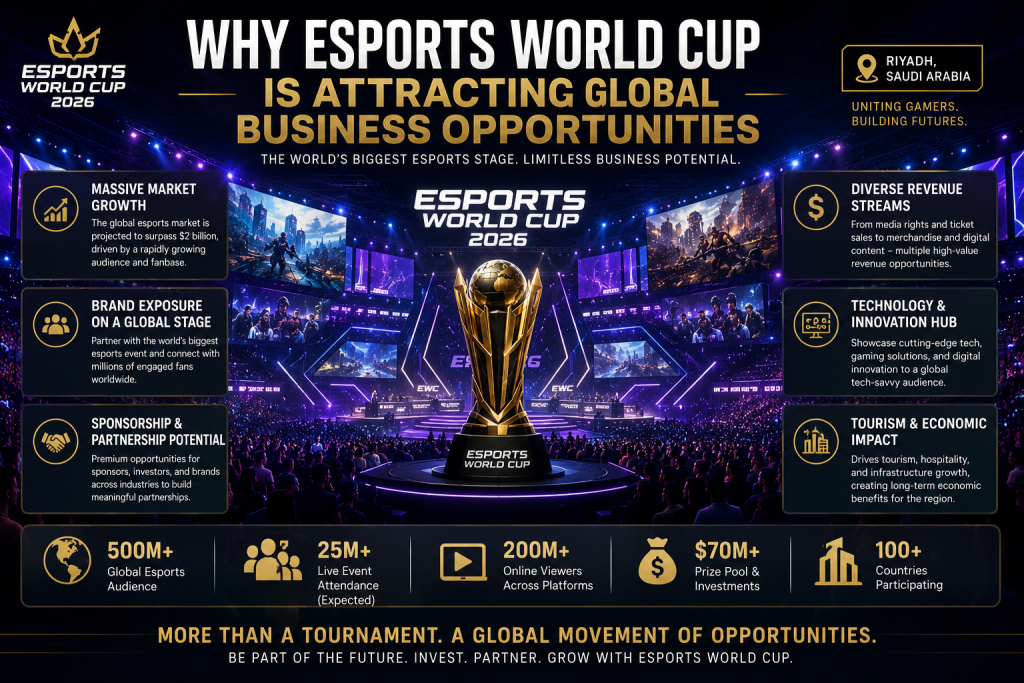

The Esports World Cup has evolved into much more than a competitive gaming event. It has become a global business platform that attracts investors, technology companies, media organizations, sponsors, tourism boards, and entrepreneurs from around the world. With millions of fans tuning in online and thousands attending live events, the tournament is creating economic opportunities that extend far beyond gaming itself.
As esports continues to gain mainstream recognition, the Esports World Cup is increasingly being compared to major sporting events like the FIFA World Cup and the Olympic Games—not only for its entertainment value but also for its significant commercial impact.
A Global Audience Creates Massive Business Potential
One of the biggest reasons companies are investing in the Esports World Cup is its enormous international audience. Millions of viewers watch live competitions across streaming platforms, social media, and television broadcasts.
Unlike traditional sporting events that often depend on regional television coverage, esports reaches audiences instantly across multiple digital platforms. This gives brands access to young, tech-savvy consumers in North America, Europe, Asia-Pacific, the Middle East, and Latin America simultaneously.
For advertisers, few entertainment properties offer such a globally connected audience.
Sponsorship Revenue Continues to Grow
The Esports World Cup has become one of the most attractive sponsorship opportunities in digital entertainment. Companies from various industries now see esports as an effective way to connect with younger consumers.
Popular sponsors include:
- Technology companies
- Smartphone manufacturers
- Automotive brands
- Energy drink companies
- Financial institutions
- Internet service providers
- Gaming hardware manufacturers
- Apparel and lifestyle brands
These partnerships extend beyond simple logo placement. Brands create exclusive content, fan experiences, interactive campaigns, and influencer collaborations that increase customer engagement throughout the tournament.
Streaming Platforms Benefit From Record Engagement
The popularity of live esports broadcasts has transformed streaming into a highly profitable business.
Streaming platforms generate revenue through:
- Advertising
- Premium subscriptions
- Digital tipping
- Membership programs
- Exclusive broadcasting rights
- Brand partnerships
Millions of fans watch tournaments for several hours daily, creating exceptionally high viewer retention compared to many traditional online entertainment formats.
As viewing hours continue to grow, media companies are investing more heavily in esports broadcasting infrastructure.
Tourism and Hospitality Experience Strong Growth
Hosting the Esports World Cup brings significant economic benefits to local economies.
International visitors spend money on:
- Hotels
- Restaurants
- Transportation
- Shopping
- Entertainment
- Local attractions
The event also creates temporary employment opportunities across hospitality, event management, security, logistics, and tourism services.
Many host cities now view esports tournaments as valuable economic drivers capable of attracting international visitors throughout the event period.
Technology Companies Showcase Innovation
The Esports World Cup serves as a global exhibition for cutting-edge technology.
Companies demonstrate products including:
- Gaming laptops
- High-performance PCs
- Graphics cards
- Gaming monitors
- Virtual reality devices
- AI-powered gaming tools
- Cloud gaming platforms
- High-speed networking equipment
Product launches timed with the tournament often receive worldwide attention because the audience consists of early technology adopters.
Gaming Publishers Expand Their Ecosystems
Game developers benefit enormously from international tournaments.
Competitive events help publishers:
- Increase player engagement
- Sell downloadable content
- Promote seasonal updates
- Introduce new esports features
- Strengthen gaming communities
- Extend game lifecycles
Successful tournaments often lead to increased player registrations and higher in-game purchases, making esports an important part of long-term business strategy.
Content Creators Build New Revenue Streams
The creator economy has become closely connected with esports.
Popular content opportunities include:
- Match analysis videos
- Live watch parties
- Tournament highlights
- Player interviews
- Behind-the-scenes coverage
- Podcasts
- Educational gaming content
- Social media clips
Thousands of creators generate millions of views during the tournament, creating advertising income and sponsorship opportunities for independent influencers.
Investment in Professional Teams Is Rising
Professional esports organizations have evolved into sophisticated businesses.
Modern organizations generate revenue through:
- Sponsorship agreements
- Merchandise sales
- Streaming income
- Tournament winnings
- Content production
- Licensing partnerships
- Brand collaborations
- Fan memberships
Private investors and venture capital firms increasingly view esports organizations as long-term digital entertainment assets with strong growth potential.
Merchandising Has Become a Major Business
Esports fans actively purchase official merchandise, including:
- Team jerseys
- Gaming accessories
- Collectible items
- Limited-edition apparel
- Mouse pads
- Keyboards
- Collaboration products
Exclusive tournament merchandise often sells out quickly, creating additional revenue for organizers, teams, and licensing partners.
Education and Career Opportunities Continue to Expand
The success of the Esports World Cup has also created new career paths.
Growing employment opportunities include:
- Event management
- Broadcast production
- Marketing
- Data analytics
- Coaching
- Game development
- Sports psychology
- Graphic design
- Cybersecurity
- Talent management
Universities and training institutions are increasingly offering esports-related programs to prepare students for careers in this rapidly expanding industry.
Emerging Markets Drive Future Growth
Countries across Asia, the Middle East, Africa, and Latin America are investing heavily in gaming infrastructure and esports development.
Governments recognize esports as a source of:
- Digital innovation
- Tourism
- Employment
- Technology investment
- International visibility
- Youth engagement
This international support is helping transform esports into a sustainable global industry rather than a niche entertainment sector.
Conclusion
The Esports World Cup is no longer just about crowning the world’s best gamers. It has become a global business ecosystem where technology, media, entertainment, tourism, education, and digital commerce intersect. Companies see the event as a gateway to one of the fastest-growing consumer audiences in the world, while investors recognize its long-term commercial potential.
As digital entertainment continues to reshape global consumer behavior, the Esports World Cup is positioning itself as one of the most influential annual business events in the gaming industry. From sponsorships and streaming to tourism, innovation, and career creation, its economic impact extends far beyond the competition itself, making it one of the most exciting business opportunities in modern entertainment.