
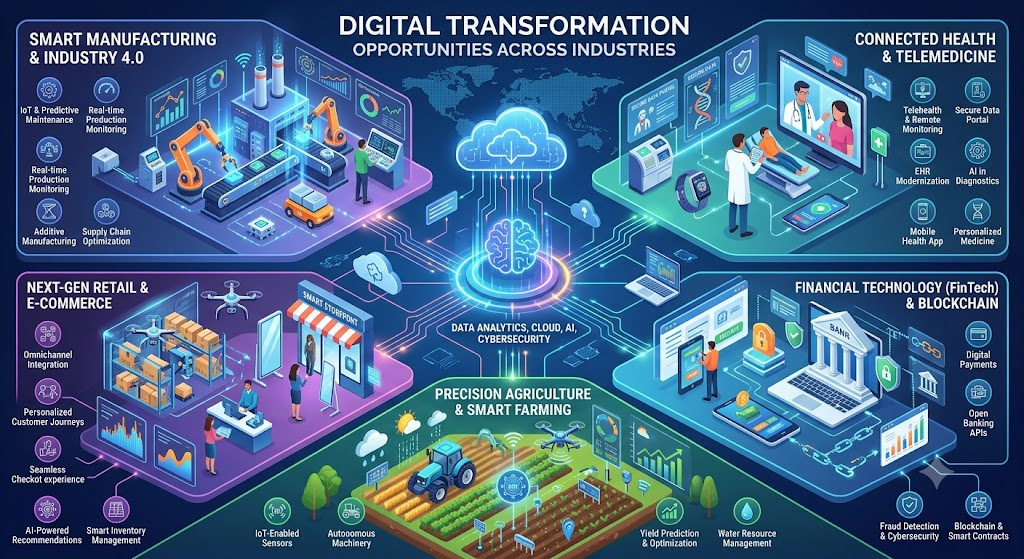

Digital transformation is no longer limited to technology companies. Organizations across healthcare, manufacturing, retail, finance, education, logistics, agriculture, and government are embracing digital technologies to improve efficiency, enhance customer experiences, and create new revenue opportunities. As artificial intelligence (AI), cloud computing, the Internet of Things (IoT), big data, and automation continue to evolve, businesses are finding innovative ways to modernize operations and stay competitive in an increasingly digital world.
What Is Digital Transformation?
Digital transformation refers to the integration of digital technologies into every aspect of an organization. It goes beyond adopting new software—it involves rethinking business processes, improving decision-making through data, and creating better experiences for customers and employees.
Key technologies driving digital transformation include:
- Artificial Intelligence (AI)
- Cloud Computing
- Internet of Things (IoT)
- Big Data Analytics
- Robotic Process Automation (RPA)
- Blockchain
- Cybersecurity Solutions
- 5G Connectivity
- Edge Computing
Together, these technologies help organizations become more agile, efficient, and customer-focused.
Healthcare: Smarter Patient Care
Healthcare providers are using digital tools to improve diagnosis, treatment, and patient engagement.
Major opportunities include:
- Telemedicine and virtual consultations
- AI-assisted medical imaging
- Electronic Health Records (EHRs)
- Wearable health monitoring devices
- Remote patient monitoring
- Predictive analytics for disease prevention
These innovations enable faster care delivery, reduce administrative burdens, and improve patient outcomes.
Manufacturing: Building Smart Factories
Manufacturers are embracing Industry 4.0 by connecting machines, sensors, and production systems.
Digital transformation opportunities include:
- Predictive equipment maintenance
- AI-powered quality control
- Digital twins for production optimization
- Automated robotics
- Real-time supply chain visibility
- Smart inventory management
These technologies reduce downtime, increase productivity, and improve operational efficiency.
Retail: Creating Personalized Shopping Experiences
Retailers are using digital technologies to better understand customer preferences and deliver seamless shopping experiences.
Key innovations include:
- AI-powered product recommendations
- Omnichannel commerce
- Contactless payments
- Smart inventory tracking
- Customer behavior analytics
- Augmented Reality (AR) product visualization
These solutions improve customer satisfaction while increasing sales and loyalty.
Financial Services: Enhancing Security and Convenience
Banks and financial institutions continue to invest heavily in digital transformation.
Emerging opportunities include:
- Mobile banking platforms
- AI-powered fraud detection
- Digital payments
- Automated loan processing
- Blockchain-based transactions
- Personalized financial services
Digital innovation is making financial services faster, safer, and more accessible.
Education: Expanding Learning Opportunities
Educational institutions are leveraging technology to make learning more engaging and accessible.
Digital transformation initiatives include:
- Online learning platforms
- AI-based personalized education
- Virtual classrooms
- Learning management systems
- Interactive digital content
- Cloud-based collaboration tools
These technologies support flexible learning and improve educational outcomes.
Logistics and Supply Chain: Improving Efficiency
The logistics industry is becoming increasingly data-driven.
Key digital opportunities include:
- Real-time shipment tracking
- AI route optimization
- Warehouse automation
- Smart fleet management
- Predictive demand forecasting
- IoT-enabled asset monitoring
These innovations help reduce costs, improve delivery times, and increase supply chain resilience.
Agriculture: Advancing Smart Farming
Farmers are adopting digital technologies to increase productivity and promote sustainable practices.
Key applications include:
- Precision agriculture
- Drone-based crop monitoring
- IoT soil sensors
- AI-powered yield prediction
- Automated irrigation systems
- Farm management software
These tools enable better resource utilization and improve crop quality.
Government and Public Services
Governments worldwide are modernizing public services through digital initiatives.
Examples include:
- Online citizen services
- Digital identity systems
- Smart city infrastructure
- AI-powered public administration
- Digital tax filing
- Intelligent traffic management
These initiatives improve transparency, efficiency, and accessibility for citizens.
Challenges to Digital Transformation
While digital transformation offers significant opportunities, organizations also face several challenges:
- Cybersecurity threats
- Data privacy concerns
- Legacy system integration
- Skills shortages
- High implementation costs
- Change management and employee adoption
Addressing these challenges requires strong leadership, strategic planning, and continuous workforce development.
Future Outlook
The pace of digital transformation is expected to accelerate as AI, cloud computing, 5G, and automation become more advanced and widely adopted. Organizations that invest in digital innovation today will be better positioned to improve productivity, respond to changing customer expectations, and remain competitive in the years ahead.
Cross-industry collaboration, data-driven decision-making, and intelligent automation will continue to shape the future of business. Digital transformation is no longer a competitive advantage—it is becoming a fundamental requirement for sustainable growth and long-term success.
Conclusion
Digital transformation is creating opportunities across virtually every industry by improving efficiency, enabling innovation, and delivering better customer experiences. From healthcare and manufacturing to retail, finance, education, agriculture, and government, digital technologies are redefining how organizations operate. As businesses continue to embrace emerging technologies, those that prioritize innovation, adaptability, and digital skills will be best equipped to thrive in an increasingly connected world.