
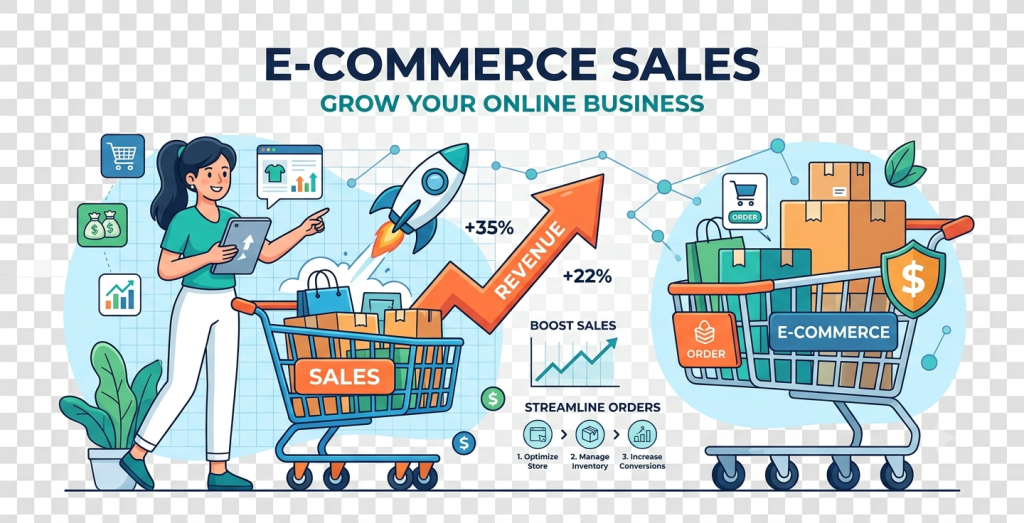

The e-commerce industry has become one of the most dynamic sectors of the global economy, transforming how consumers discover, compare, and purchase products. As internet accessibility improves and digital payment systems become more secure, online retail continues to attract businesses of every size. From startups to multinational brands, companies are investing heavily in digital storefronts, personalized customer experiences, and innovative fulfillment solutions to stay competitive.
Consumer expectations have evolved significantly over the past few years. Shoppers now demand faster deliveries, flexible payment options, personalized recommendations, and seamless shopping experiences across multiple devices. These expectations are creating new opportunities for retailers that embrace technological innovation while maintaining customer trust.
Rising Mobile Commerce is Driving Sales
Mobile devices have become the preferred shopping channel for millions of consumers worldwide. Smartphones allow customers to browse products, compare prices, read reviews, and complete purchases within minutes. Retailers are responding by designing mobile-friendly websites and feature-rich applications that simplify the buying journey.
Features such as one-click checkout, biometric authentication, digital wallets, and instant payment processing have significantly reduced cart abandonment rates. Businesses investing in responsive mobile experiences are seeing stronger customer engagement and increased conversion rates.
Additionally, social media integration enables users to purchase products directly from platforms where they spend most of their time, creating a seamless connection between product discovery and purchase.
Artificial Intelligence is Personalizing Shopping
Artificial intelligence has become a valuable asset for online retailers seeking to improve customer experiences. AI-powered recommendation engines analyze browsing behavior, purchase history, and customer preferences to suggest products that are most relevant to individual shoppers.
Virtual shopping assistants and intelligent chatbots provide instant customer support, answer product-related questions, and guide consumers throughout the purchasing process. These tools improve satisfaction while reducing operational costs for businesses.
Predictive analytics also helps retailers forecast customer demand, optimize inventory levels, and reduce overstocking or stock shortages, leading to improved operational efficiency.
Key Benefits of AI in E-commerce
| AI Application | Business Benefit |
|---|---|
| Product Recommendations | Higher conversion rates |
| Chatbots | 24/7 customer support |
| Demand Forecasting | Better inventory planning |
| Dynamic Pricing | Improved competitiveness |
| Fraud Detection | Enhanced transaction security |
Cross-Border Commerce Creates New Revenue Streams
International e-commerce has opened enormous opportunities for businesses seeking customers beyond domestic markets. Improved logistics, localized payment systems, and multilingual websites have made it easier than ever to sell products globally.
Consumers are increasingly comfortable purchasing from international retailers when transparent shipping costs, reliable delivery timelines, and secure payment methods are available. Businesses that localize their content, pricing, and customer support gain a significant competitive advantage in overseas markets.
Cross-border commerce also enables small and medium-sized enterprises to compete globally without investing heavily in physical retail infrastructure.
Omnichannel Retail is Becoming Essential
Today’s consumers rarely shop through a single channel. They may discover products on social media, research them on a retailer’s website, compare prices on marketplaces, and finally complete purchases through mobile applications.
Successful retailers are integrating physical stores with digital platforms to deliver consistent shopping experiences. Services such as Buy Online, Pick Up In Store (BOPIS), same-day delivery, and easy product returns strengthen customer loyalty while increasing operational flexibility.
Omnichannel strategies also provide retailers with comprehensive customer insights, enabling better marketing personalization and inventory management.
Sustainability Influences Purchasing Decisions
Environmental awareness has become an important factor influencing consumer behavior. Many shoppers actively seek brands that prioritize sustainable packaging, ethical sourcing, and environmentally responsible logistics.
Retailers adopting recyclable packaging, carbon-conscious shipping methods, and transparent sustainability initiatives often strengthen brand reputation and attract environmentally conscious consumers.
Sustainability is no longer viewed as a competitive advantage alone; it is increasingly becoming an expectation among modern online shoppers.
Major Growth Opportunities in E-commerce
| Opportunity Area | Growth Potential |
|---|---|
| Mobile Commerce | High |
| AI Personalization | High |
| Cross-Border Sales | High |
| Social Commerce | Very High |
| Subscription Services | Moderate to High |
| Sustainable Retail | High |
Digital Payments Continue to Expand
The rapid adoption of digital payment solutions has simplified online transactions worldwide. Consumers now have access to multiple payment options, including digital wallets, instant bank transfers, Buy Now Pay Later (BNPL) services, and contactless payment methods.
Flexible payment options improve customer confidence while encouraging larger purchase values. Retailers offering diverse payment methods are better positioned to serve customers across different demographics and geographic regions.
Security technologies such as tokenization, biometric authentication, and real-time fraud monitoring further enhance trust in online shopping environments.
Data Analytics Helps Businesses Grow
Retailers now have access to vast amounts of customer data that can be transformed into actionable business intelligence. Advanced analytics platforms help businesses understand customer preferences, identify purchasing patterns, optimize pricing strategies, and improve marketing campaigns.
Personalized email campaigns, targeted advertisements, and loyalty programs based on customer behavior often generate higher engagement compared to traditional mass marketing approaches.
Data-driven decision-making also enables retailers to improve inventory planning and reduce operational costs while maximizing profitability.
Future Outlook
The future of e-commerce will be shaped by continuous technological innovation and changing consumer expectations. Artificial intelligence, automation, immersive shopping experiences, and intelligent logistics will redefine how businesses engage with customers. Emerging technologies such as augmented reality product visualization, voice commerce, and autonomous delivery systems are expected to become increasingly common over the coming years.
Retailers that prioritize customer experience, digital innovation, sustainability, and secure payment infrastructure will be well-positioned to capitalize on evolving market opportunities. Businesses that embrace omnichannel strategies and leverage data analytics to personalize shopping experiences are likely to remain competitive in an increasingly crowded digital marketplace.
Conclusion
E-commerce continues to offer substantial opportunities for businesses across industries. Mobile shopping, AI-powered personalization, cross-border expansion, digital payments, sustainability initiatives, and omnichannel retailing are creating new pathways for growth. As consumer preferences continue to evolve, companies that invest in innovation, operational efficiency, and customer-centric strategies will be better equipped to thrive in the rapidly expanding world of digital commerce.