
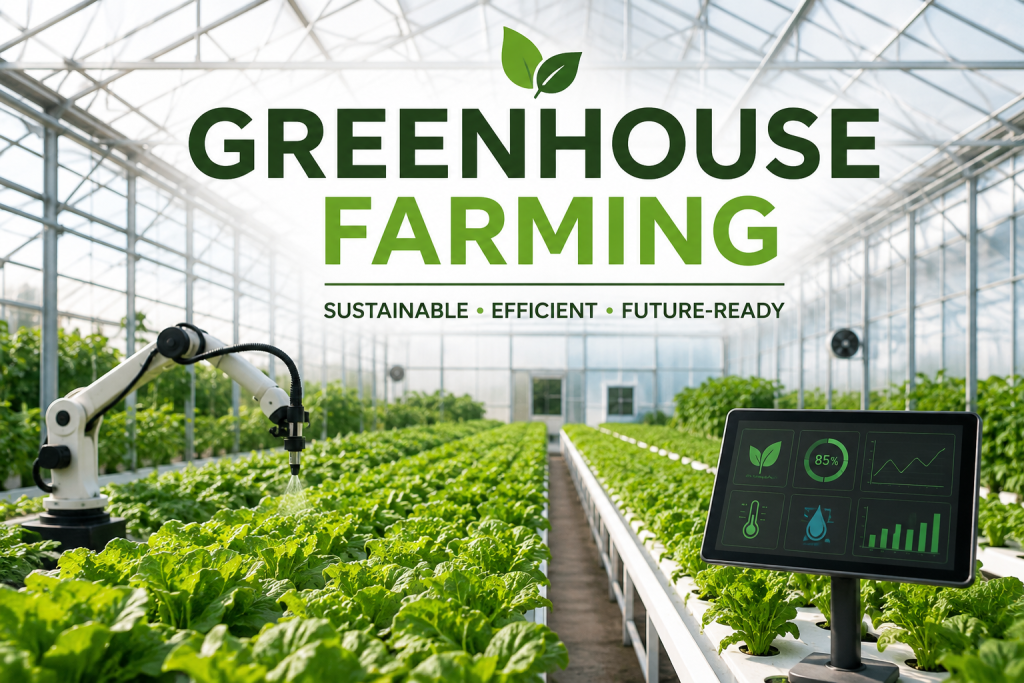

Agriculture is undergoing a significant transformation as growers face increasing pressure to produce more food while using fewer natural resources. Climate change, unpredictable weather patterns, shrinking arable land, and rising demand for high-quality produce have encouraged farmers and agribusinesses to explore more resilient cultivation methods. Among these, greenhouse farming has emerged as one of the most effective solutions for achieving consistent crop production while improving resource efficiency.
Unlike conventional open-field farming, greenhouse cultivation provides a controlled environment where temperature, humidity, light, and irrigation can be managed according to crop requirements. This enables farmers to reduce weather-related risks, improve yields, extend growing seasons, and produce premium-quality fruits, vegetables, flowers, and herbs throughout the year.
Growing investments in protected agriculture, water-efficient farming practices, and sustainable food production are further accelerating the adoption of greenhouse farming worldwide. Governments are also supporting protected cultivation through subsidies, training programs, and infrastructure development to strengthen food security and improve farmers’ incomes.
As agricultural innovation continues to evolve, greenhouse farming is becoming a vital component of modern food production. From small commercial farms to large-scale agricultural enterprises, controlled-environment agriculture is helping reshape the future of farming by combining productivity, sustainability, and economic viability.
What Is Greenhouse Farming?
Greenhouse farming is a method of cultivating crops inside specially designed structures covered with transparent materials such as glass or polycarbonate sheets. These structures create a controlled growing environment that protects plants from extreme weather conditions while allowing growers to regulate factors such as temperature, humidity, ventilation, sunlight, and irrigation.
Unlike traditional farming, where crop growth depends heavily on seasonal weather patterns, greenhouse farming enables year-round cultivation with greater consistency and efficiency. Farmers can optimize growing conditions for different crops, resulting in improved productivity, better quality produce, and reduced crop losses.
Modern greenhouses often incorporate advanced irrigation systems, climate control equipment, automated ventilation, nutrient management, and precision monitoring technologies to maximize operational efficiency. Depending on the scale of operation, greenhouse farming can support everything from vegetable and fruit production to ornamental plants, flowers, herbs, and high-value specialty crops.
The increasing focus on sustainable agriculture has made greenhouse farming an important strategy for conserving water, improving land productivity, and reducing dependence on chemical pesticides while maintaining stable agricultural output.
Why Greenhouse Farming Is Growing Rapidly
The expansion of greenhouse farming is being driven by a combination of environmental, economic, and agricultural factors that are reshaping food production across the world.
One of the primary growth drivers is the increasing impact of climate change on conventional agriculture. Rising temperatures, irregular rainfall, droughts, floods, and extreme weather events have made open-field farming more unpredictable. Greenhouses provide a controlled cultivation environment that minimizes these risks and enables farmers to maintain consistent production regardless of external weather conditions.
Population growth and urbanization are also contributing to rising demand for fresh fruits and vegetables throughout the year. Consumers increasingly expect access to high-quality produce regardless of season, encouraging growers to adopt greenhouse systems that support continuous cultivation and stable supply chains.
Water scarcity has become another major factor driving adoption. Greenhouse farming typically consumes significantly less water than conventional farming through efficient irrigation methods such as drip irrigation and controlled nutrient delivery. This makes protected cultivation particularly valuable in regions experiencing declining freshwater availability.
Governments across many countries are promoting protected agriculture through financial assistance, infrastructure support, and farmer training initiatives. These programs aim to improve food security, increase agricultural productivity, and encourage climate-resilient farming practices.
The growing popularity of organic farming and pesticide-free cultivation has further strengthened the greenhouse farming market. Controlled environments reduce pest pressure and allow growers to implement integrated pest management strategies, helping produce healthier crops with reduced chemical usage.
In addition, retailers, supermarkets, restaurants, and food processing companies increasingly prefer consistent product quality and reliable supply throughout the year. Greenhouse cultivation helps farmers meet these commercial requirements while reducing production risks and improving profitability.
As global agriculture continues adapting to changing environmental conditions, greenhouse farming is expected to play an increasingly important role in ensuring sustainable food production, efficient resource utilization, and long-term agricultural resilience.
Key Trends Shaping Greenhouse Farming
The greenhouse farming industry is evolving rapidly as growers seek innovative ways to improve productivity, optimize resource utilization, and meet the rising global demand for fresh produce. Several emerging trends are transforming controlled-environment agriculture into one of the fastest-growing segments of modern farming.
Expansion of High-Value Crop Cultivation
One of the most noticeable trends is the increasing cultivation of high-value crops inside greenhouses. Tomatoes, cucumbers, bell peppers, strawberries, lettuce, herbs, orchids, and cut flowers are among the most commonly grown greenhouse crops due to their strong market demand and premium pricing.
Unlike seasonal farming, greenhouse cultivation enables producers to supply fresh produce throughout the year, allowing them to build long-term relationships with supermarkets, restaurants, hotels, exporters, and food processing companies. This consistent production cycle improves profitability while reducing dependence on unpredictable weather conditions.
Growing Focus on Water-Efficient Agriculture
Water conservation has become a major priority for agricultural producers worldwide. Greenhouse farming supports efficient irrigation methods that deliver water directly to plant roots, significantly reducing evaporation and water loss.
Many commercial greenhouse operators now recycle irrigation water and monitor moisture levels to ensure optimal usage. As freshwater resources become increasingly limited in several regions, efficient water management is expected to remain a major driver of greenhouse adoption.
Rise of Sustainable Farming Practices
Sustainability is becoming a defining characteristic of modern greenhouse operations. Farmers are adopting environmentally responsible cultivation methods that reduce waste, improve energy efficiency, and minimize the environmental footprint of food production.
Many greenhouse facilities are integrating renewable energy sources, rainwater harvesting systems, biodegradable growing media, and environmentally friendly pest management techniques to support sustainable agriculture while meeting consumer expectations for responsibly produced food.
Increasing Adoption of Protected Cultivation
Protected cultivation is gaining popularity among commercial farmers due to its ability to reduce crop losses caused by heavy rainfall, hailstorms, excessive heat, strong winds, and pest infestations.
This approach allows growers to maintain stable production even during unfavorable weather conditions, improving both crop quality and overall farm productivity. As climate variability continues to affect agricultural output, protected farming systems are becoming an increasingly attractive investment.
Growth of Urban and Peri-Urban Farming
Rapid urbanization is encouraging greenhouse development closer to major cities, reducing transportation costs and improving the availability of fresh produce.
Urban greenhouse farms enable retailers and consumers to access locally grown vegetables and herbs with shorter supply chains and reduced post-harvest losses. This trend also supports food security while lowering the environmental impact associated with long-distance transportation.
Increasing Private and Institutional Investment
Agricultural investment funds, food companies, and commercial farming enterprises are allocating more capital toward greenhouse infrastructure.
Growing investor confidence is driven by increasing demand for year-round food production, rising consumption of premium vegetables, and the long-term need for climate-resilient agricultural systems.
Large-scale greenhouse projects are expanding across developed and emerging economies as investors recognize the sector’s potential for stable returns and sustainable growth.
Emerging Opportunities in Greenhouse Farming
The greenhouse farming industry presents significant opportunities for farmers, agribusinesses, investors, equipment manufacturers, and agricultural service providers.
Year-Round Food Production
Continuous cultivation enables growers to produce fresh vegetables, herbs, fruits, and flowers regardless of seasonal limitations. This helps businesses secure stable revenue while improving market competitiveness.
Premium Produce Markets
Consumers increasingly prefer fresh, clean, and high-quality produce with consistent appearance and nutritional value.
Greenhouse-grown vegetables often command higher prices due to their superior quality, reduced pesticide usage, and reliable availability throughout the year.
Export Opportunities
Countries with advanced greenhouse infrastructure are expanding exports of vegetables, flowers, herbs, and specialty crops.
Improved quality control and standardized production methods help greenhouse operators meet international food safety and export requirements.
Government Support Programs
Many governments continue introducing subsidy programs, low-interest financing, and technical training initiatives that encourage farmers to adopt protected cultivation.
These initiatives improve agricultural productivity while strengthening national food security strategies.
Expansion of Organic Farming
Greenhouse cultivation creates favorable conditions for organic farming by reducing exposure to external contaminants and allowing growers to implement biological pest management practices.
Growing consumer demand for organic products continues creating new business opportunities for greenhouse operators.
Value-Added Agricultural Businesses
Greenhouse farming also supports businesses involved in seed production, nursery development, floriculture, fresh herbs, specialty vegetables, and medicinal plant cultivation.
These niche markets often generate higher profit margins than conventional crop production.
Applications Across Industries
Although greenhouse farming is primarily associated with agriculture, its applications extend across multiple industries that rely on controlled cultivation and consistent crop quality.
Commercial Agriculture
Large-scale agricultural producers use greenhouse systems to cultivate vegetables, fruits, herbs, flowers, and ornamental plants while maximizing land productivity and reducing seasonal risks.
Food Processing Industry
Food manufacturers require reliable supplies of vegetables, herbs, and specialty crops for sauces, frozen foods, packaged salads, beverages, and processed food products.
Greenhouse farming helps ensure continuous availability of raw materials throughout the year.
Retail and Supermarkets
Modern retail chains increasingly source greenhouse-grown produce because of its consistent quality, appearance, freshness, and predictable supply.
This enables retailers to meet consumer demand while minimizing inventory shortages.
Hospitality Industry
Hotels, restaurants, and catering businesses depend on a stable supply of premium-quality vegetables, herbs, and edible flowers.
Greenhouse cultivation supports these businesses by providing fresh ingredients regardless of seasonal limitations.
Floriculture Industry
Greenhouses play an essential role in commercial flower production by protecting delicate plants from environmental stress while improving color, quality, and shelf life.
The global demand for decorative flowers continues supporting investments in greenhouse floriculture.
Research and Education
Agricultural universities and research organizations use greenhouse facilities to study crop genetics, pest management, climate adaptation, soil science, and sustainable farming practices under controlled conditions.
These research activities contribute to the development of more productive and resilient agricultural systems.
Major Technologies Supporting Greenhouse Farming
Modern greenhouse operations increasingly rely on advanced technologies that improve productivity, optimize resource utilization, and simplify farm management.
Climate control systems regulate temperature, humidity, ventilation, and airflow to create ideal growing conditions throughout the year.
Efficient irrigation technologies deliver water and nutrients directly to plant roots, reducing waste while improving crop health.
Automated shading and ventilation systems help maintain stable environmental conditions by responding to changes in sunlight intensity and internal temperatures.
Environmental monitoring sensors continuously measure growing conditions, enabling growers to make timely adjustments that improve crop performance and reduce operational risks.
Modern greenhouse structures are also being designed with improved insulation, energy-efficient materials, and optimized layouts that enhance productivity while lowering operating costs.
Regional Outlook
The adoption of greenhouse farming continues to expand across both developed and emerging economies as governments and agribusinesses prioritize sustainable food production, climate resilience, and efficient resource management. While the pace of adoption varies by region, greenhouse cultivation is becoming an essential component of modern agriculture worldwide.
North America
North America remains a significant market for greenhouse farming, driven by increasing consumer demand for fresh, locally grown produce throughout the year. Commercial greenhouse operators are expanding production of tomatoes, leafy greens, cucumbers, berries, and herbs to reduce dependence on seasonal imports. Rising investments in protected agriculture, water conservation, and energy-efficient greenhouse infrastructure continue to support market growth.
Europe
Europe is one of the most mature greenhouse farming markets globally. Countries such as the Netherlands and Spain have developed highly productive greenhouse industries that supply fruits, vegetables, and flowers to domestic and international markets. Strict environmental regulations, resource-efficient farming practices, and strong government support for sustainable agriculture continue to drive innovation across the region.
Asia-Pacific
Asia-Pacific is expected to witness the fastest expansion in greenhouse farming over the coming years. Rapid population growth, increasing food demand, shrinking agricultural land, and climate variability are encouraging farmers to adopt protected cultivation. Countries including China, India, Japan, and South Korea are investing in greenhouse infrastructure to improve crop productivity, reduce post-harvest losses, and strengthen food security.
Latin America
Latin America is gradually expanding greenhouse cultivation, particularly for export-oriented fruits, vegetables, and flowers. Favorable climatic conditions combined with growing international demand for premium agricultural products are creating new opportunities for greenhouse operators across the region.
Middle East & Africa
Water scarcity and extreme climatic conditions have increased interest in greenhouse farming throughout the Middle East and parts of Africa. Protected cultivation enables year-round production while significantly improving water-use efficiency, making it an attractive solution for strengthening regional food security.
Challenges Facing Greenhouse Farming
Despite its numerous advantages, greenhouse farming faces several operational and economic challenges that can influence adoption rates and long-term profitability.
One of the most significant barriers is the high initial investment required to establish greenhouse infrastructure. Construction costs, irrigation systems, climate control equipment, and protective materials often require substantial capital, making large-scale adoption difficult for small and medium-sized farmers.
Operational expenses also remain an important consideration. Greenhouses require regular maintenance, skilled labor, energy for ventilation and temperature control, and continuous monitoring to maintain optimal growing conditions.
Climate control can become particularly challenging in regions experiencing prolonged heat waves or extreme cold. Maintaining stable environmental conditions may increase energy consumption, affecting production costs.
Pest and disease management, while generally easier than in open-field farming, still requires careful monitoring. If pests enter a greenhouse environment, they can spread rapidly due to the enclosed growing conditions.
Another challenge involves limited technical knowledge among growers. Successful greenhouse cultivation requires understanding crop nutrition, irrigation scheduling, environmental control, and disease prevention. Expanding farmer education and technical support will remain essential for sustainable industry growth.
Future Outlook
The future of greenhouse farming appears highly promising as agriculture increasingly shifts toward sustainable, resource-efficient, and climate-resilient production systems. Rising global food demand, combined with the need to conserve water and improve land productivity, is expected to accelerate investments in protected cultivation over the coming decade.
Governments are likely to continue supporting greenhouse farming through financial incentives, modernization programs, and agricultural development initiatives aimed at improving food security. Public-private partnerships may also play an important role in expanding greenhouse infrastructure, particularly in regions vulnerable to climate change and water scarcity.
The commercial cultivation of high-value vegetables, herbs, flowers, and specialty crops is expected to remain one of the strongest growth areas. As consumer preferences continue shifting toward fresh, locally produced, and sustainably grown food, greenhouse operators will have greater opportunities to differentiate themselves through quality, consistency, and year-round availability.
Future greenhouse facilities are also expected to become more resource-efficient through improved water management, renewable energy integration, advanced environmental monitoring, and better structural design. These developments will help reduce operational costs while improving productivity and environmental sustainability.
Beyond food production, greenhouse farming is likely to contribute significantly to rural development, employment generation, agricultural exports, and resilient supply chains. As countries work toward strengthening food systems and reducing the environmental impact of agriculture, greenhouse farming will continue playing a central role in the future of global farming.
Conclusion
Greenhouse farming has evolved from a specialized cultivation method into a strategic solution for addressing many of the challenges facing modern agriculture. By providing a controlled growing environment, it enables farmers to produce high-quality crops throughout the year while reducing dependence on unpredictable weather conditions and improving the efficient use of land and water resources.
Growing consumer demand for fresh produce, supportive government initiatives, and increasing investments in sustainable agriculture are creating new opportunities for greenhouse operators worldwide. Although challenges such as infrastructure costs, energy requirements, and technical expertise remain, ongoing innovation and improved farming practices are making greenhouse cultivation increasingly accessible and economically viable.
As agriculture continues adapting to climate change and changing food consumption patterns, greenhouse farming is expected to remain a cornerstone of sustainable food production. Its ability to combine productivity, environmental responsibility, and economic resilience positions it as one of the most promising agricultural systems for the years ahead.