
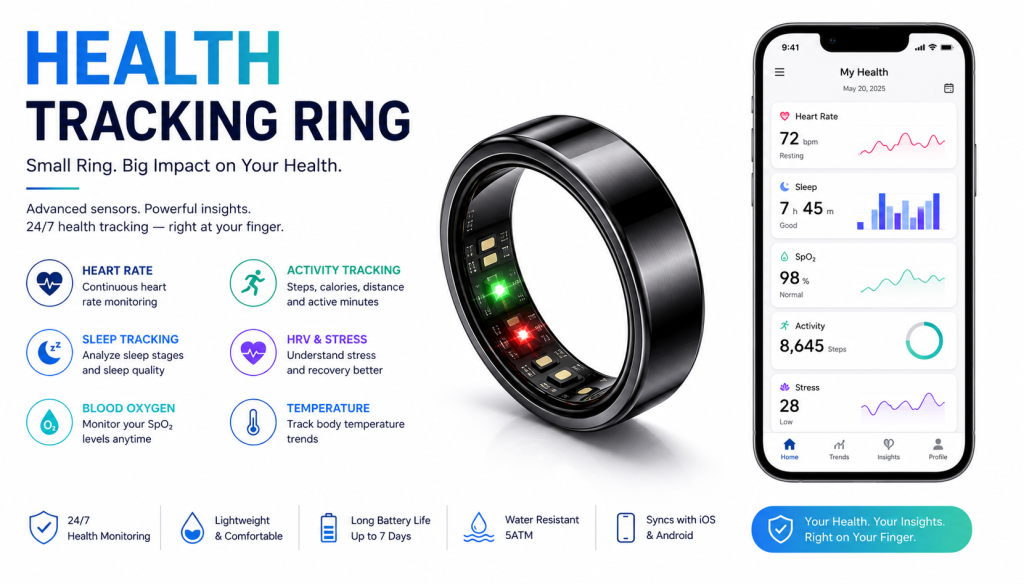

Health tracking rings are rapidly transforming the wearable technology landscape by offering continuous health monitoring in a compact, stylish, and non-intrusive form factor. As consumers increasingly prioritize preventive healthcare and personalized wellness, smart rings are emerging as the next evolution beyond fitness bands and smartwatches. Equipped with advanced biosensors, artificial intelligence (AI), and cloud connectivity, these devices provide valuable insights into sleep quality, heart health, stress levels, recovery, and overall well-being.
Industry analysts estimate that the global smart ring market is expected to grow at a compound annual growth rate (CAGR) exceeding 20% over the coming decade, driven by rising health awareness, technological advancements, and increasing demand for discreet wearable devices. The future of health tracking rings extends far beyond fitness monitoring, with applications expected in remote healthcare, chronic disease management, digital therapeutics, and even preventive diagnostics.
Rising Consumer Interest in Preventive Healthcare
Healthcare is shifting from reactive treatment toward preventive care. According to the World Health Organization (WHO), nearly 74% of global deaths are caused by non-communicable diseases (NCDs) such as heart disease, diabetes, and stroke. Continuous health monitoring allows individuals to identify early warning signs before symptoms become severe.
Health tracking rings support this trend by providing 24/7 monitoring without disrupting daily activities. Unlike bulky smartwatches, rings are lightweight, comfortable during sleep, and capable of collecting higher-quality physiological data due to their close contact with blood vessels in the finger.
Growing awareness of sleep disorders, stress management, and cardiovascular health is significantly increasing consumer adoption across all age groups.
AI Is Making Health Rings Smarter
Artificial Intelligence has become the backbone of modern health tracking devices. Rather than simply displaying raw data, AI algorithms analyze long-term behavioral patterns and generate actionable health recommendations.
Today’s premium health rings can monitor:
- Heart rate and resting heart rate
- Heart Rate Variability (HRV)
- Blood oxygen saturation (SpO₂)
- Skin temperature
- Sleep stages
- Stress levels
- Activity tracking
- Recovery scores
- Menstrual cycle prediction
AI continuously learns user habits and identifies abnormalities that may indicate fatigue, illness, elevated stress, or reduced recovery.
Future generations are expected to deliver predictive healthcare by identifying potential health risks days before physical symptoms appear.
The Growing Importance of Sleep Monitoring
Sleep has become one of the biggest focus areas in wearable health technology. Research indicates that nearly one-third of adults globally experience inadequate sleep, affecting productivity, immunity, and cardiovascular health.
Health tracking rings excel in sleep analysis because users are more likely to wear them overnight compared to smartwatches.
Advanced sensors measure:
- Deep sleep duration
- REM sleep
- Light sleep
- Sleep latency
- Nighttime heart rate
- Respiratory rate
- Overnight body temperature
AI then generates a daily readiness score, helping users determine whether their body is prepared for exercise or requires additional recovery.
This personalized approach is expected to become a cornerstone of digital wellness over the next decade.
Remote Healthcare Is Creating New Opportunities
One of the most promising future applications of health tracking rings lies in remote patient monitoring.
Healthcare providers increasingly rely on wearable devices to monitor patients outside hospitals. Continuous physiological data enables physicians to track chronic conditions without requiring frequent in-person visits.
Potential healthcare applications include:
| Healthcare Area | Future Application |
|---|---|
| Cardiology | Continuous heart rhythm monitoring |
| Diabetes | Integration with glucose monitoring systems |
| Elderly Care | Fall detection and health alerts |
| Mental Health | Stress and anxiety monitoring |
| Post-Surgery Recovery | Remote patient recovery tracking |
| Women’s Health | Fertility and hormonal monitoring |
Remote monitoring can improve treatment outcomes while reducing healthcare costs by enabling earlier interventions.
Miniaturization of Sensors Will Expand Capabilities
Rapid advances in semiconductor technology are allowing manufacturers to integrate increasingly sophisticated sensors into tiny wearable devices.
Future health tracking rings may include:
- Non-invasive blood glucose monitoring
- Continuous blood pressure estimation
- Hydration monitoring
- Blood alcohol detection
- Cortisol (stress hormone) tracking
- Respiratory disease detection
- Early fever identification
- Oxygen variability monitoring
Flexible electronics, low-power processors, and improved battery technologies are expected to make these features commercially viable over the next decade.
Digital Healthcare Ecosystems Will Drive Adoption
Health tracking rings are becoming part of larger connected healthcare ecosystems.
Instead of functioning as standalone devices, future rings will seamlessly integrate with:
- Electronic Health Records (EHRs)
- Telemedicine platforms
- AI healthcare assistants
- Smart home devices
- Fitness applications
- Corporate wellness programs
- Health insurance platforms
This integration enables healthcare professionals to access real-time health information, improving diagnosis and personalized treatment planning.
Several insurers are also exploring incentive programs that reward users for maintaining healthy behaviors verified through wearable devices.
Consumer Wellness Is Expanding Beyond Fitness
Consumers increasingly seek holistic wellness solutions rather than simple step counters.
Future health tracking rings are expected to provide comprehensive wellness intelligence by combining physiological data with behavioral analytics.
Potential wellness metrics include:
- Emotional resilience
- Burnout prediction
- Workplace fatigue
- Cognitive readiness
- Recovery optimization
- Productivity scoring
- Personalized nutrition guidance
This shift positions smart rings as daily wellness companions rather than fitness accessories.
Privacy and Data Security Will Become Critical
As wearable devices collect sensitive biometric information, cybersecurity and data privacy will become major competitive differentiators.
Future health rings are expected to incorporate:
- End-to-end encryption
- On-device AI processing
- Biometric authentication
- Secure cloud storage
- User-controlled data sharing
- Regulatory compliance with global healthcare standards
Consumers are becoming increasingly selective about how their health data is stored and shared, making transparency an essential factor in product adoption.
The Competitive Landscape Is Accelerating Innovation
Technology companies, consumer electronics manufacturers, and healthcare startups are investing heavily in smart ring development. Competition is driving rapid improvements in sensor accuracy, battery life, AI capabilities, and design aesthetics.
Emerging trends include:
- Battery life extending beyond 7–10 days on a single charge
- Faster wireless charging
- Waterproof and medical-grade designs
- Lightweight titanium construction
- Subscription-based AI health insights
- Personalized coaching powered by generative AI
As production volumes increase, device affordability is expected to improve, making health tracking rings accessible to a broader consumer base.
The Upcoming Future: 2027 and Beyond
The future of health tracking rings looks transformative, evolving from wellness tools to sophisticated health companions and potentially medical devices.
AI and Personalization: Expect deeper on-device and cloud AI. Rings will move beyond scores to predictive, agentic insights suggesting calendar adjustments for poor recovery, personalized workouts, nutrition tweaks, or early illness warnings. Oura’s Health Radar and women’s health AI models point the way; future versions may integrate blood panel data or partner with labs for comprehensive profiling.
Sensor Advancements: Non-invasive glucose monitoring and cuffless blood pressure could arrive, though regulatory hurdles remain. Improved ECG, arrhythmia detection, and even hydration or lactate sensing are on the horizon. Miniaturization will continue, with thinner profiles, energy harvesting, and haptic feedback.
Clinical Integration: Rings could gain FDA/EMA clearances for specific diagnostics, becoming “prescription rings” prescribed alongside treatments. Health systems may incorporate wearable data into electronic records for remote monitoring of chronic conditions. This shifts the category toward medical-grade applications, expanding from consumer wellness to clinical use.
Ecosystem and Form Factor Evolution: Seamless integration with smart glasses, earbuds, or home devices for holistic environments. Gesture controls, voice notes, and productivity features may blend health with daily utility. Some envision “batteryless” designs or rings that double as secure payment/jewelry devices. Specialization could emerge rings tailored for athletes, seniors, or women’s health.
Market Expansion and Affordability: As competition intensifies, prices should drop while features rise. Shipments could multiply rapidly, with more brands entering. By the 2030s, smart rings might become as common as smartphones for health management.
Final Thoughts
Health tracking rings represent one of the most promising categories in wearable technology. Their ability to combine medical-grade sensing, artificial intelligence, and continuous monitoring within an elegant form factor positions them at the center of the future digital healthcare ecosystem.
Over the next decade, smart rings are likely to evolve from wellness accessories into essential personal health companions capable of detecting early signs of illness, supporting chronic disease management, improving sleep quality, optimizing recovery, and enabling personalized preventive healthcare.
As AI algorithms become more sophisticated and sensor technology advances, these devices will shift from reporting health metrics to predicting health outcomes. This transformation could fundamentally change how individuals interact with healthcare, empowering them to take proactive control of their well-being while supporting healthcare providers with real-time, data-driven insights.
The future of health tracking rings extends well beyond counting steps or measuring sleep they are poised to become intelligent, always-on health advisors that bridge the gap between consumer electronics and clinical healthcare. With rising investment, expanding medical applications, and growing consumer demand for personalized wellness, health tracking rings are set to play a pivotal role in shaping the next generation of connected health solutions.