
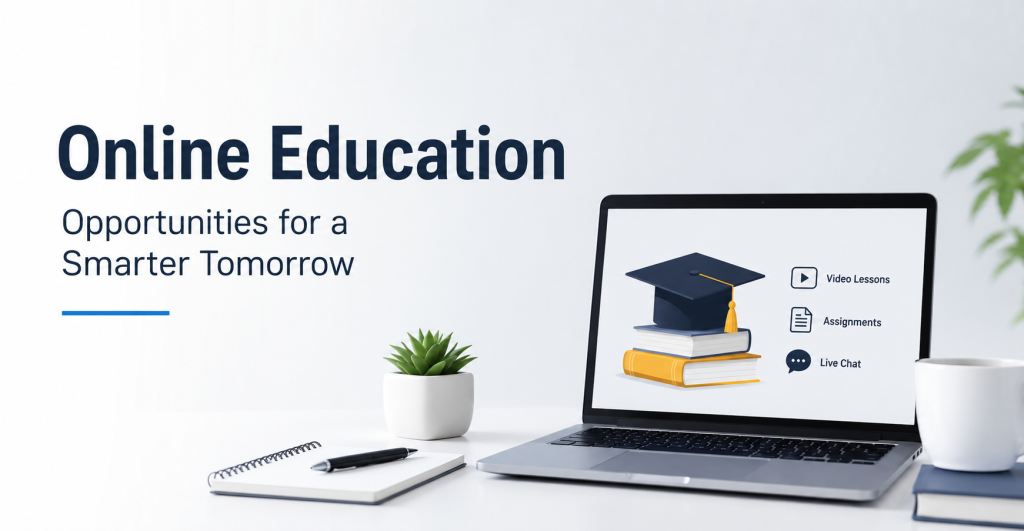

The Online Education Platform ecosystem has evolved from a supplementary learning option into a mainstream educational ecosystem. With rapid advancements in digital technology, artificial intelligence (AI), cloud computing, and mobile connectivity, online education platforms are transforming how knowledge is delivered and consumed worldwide. From professional certification programs and university degrees to short-term skill development courses, digital learning platforms now serve millions of learners across every age group. The increasing demand for flexible, accessible, and personalized education continues to position the Online Education Platform industry as one of the most influential drivers of modern learning.
The increasing need for flexible education, continuous professional development, and remote learning has accelerated the adoption of online learning solutions. Organizations are investing heavily in employee upskilling, educational institutions are expanding digital classrooms, and individuals are embracing lifelong learning to remain competitive in today’s fast-changing job market.
As technology continues to reshape education, online learning platforms present significant opportunities for innovation, accessibility, and economic growth.
Digital Learning Becomes the New Standard
Online education has become an integral part of modern learning. High-speed internet, affordable smartphones, and cloud-based learning management systems have made education more accessible than ever before. Students can now attend virtual classes, complete assignments, participate in discussions, and receive certifications without geographical limitations.
Hybrid education models are also gaining popularity as schools and universities combine traditional classroom instruction with digital learning experiences. This blended approach offers flexibility while maintaining interactive engagement between educators and students.
Businesses are equally benefiting from online learning by delivering employee training programs that reduce travel costs, improve productivity, and ensure continuous skill development.
Artificial Intelligence is Personalizing Education
Artificial intelligence is revolutionizing online education by creating personalized learning experiences. AI-powered platforms analyze student performance, identify learning gaps, and recommend customized lessons based on individual progress.
Intelligent tutoring systems provide instant feedback, adaptive quizzes, and personalized study plans that improve learning efficiency. Automated grading systems reduce administrative workloads for educators, allowing them to focus more on mentoring and curriculum development.
Virtual teaching assistants and AI chatbots are also providing 24/7 learner support, helping students access educational resources whenever they need assistance.
Opportunities for Educational Institutions
Schools, colleges, and universities are expanding their reach through digital education platforms. Institutions can now attract international students without requiring physical relocation, significantly increasing enrollment opportunities.
Universities are partnering with technology companies to launch online degree programs, executive education, and professional certification courses. These collaborations help institutions diversify revenue streams while offering learners flexible educational pathways.
Digital platforms also enable institutions to update course materials quickly, integrate multimedia learning resources, and improve student engagement through interactive content.
Growing Demand for Professional Upskilling
The rapid pace of technological advancement has increased demand for continuous learning. Professionals across industries are enrolling in online courses to acquire new technical and business skills.
Popular learning categories include:
- Artificial Intelligence
- Data Science
- Cybersecurity
- Cloud Computing
- Digital Marketing
- Software Development
- Business Management
- Financial Analysis
- Healthcare Technologies
- Graphic Design
Employers increasingly recognize online certifications as valuable credentials that demonstrate practical expertise and commitment to continuous learning.
Key Statistics
| Online Education Indicator | Recent Trend |
|---|---|
| Mobile learning adoption | Rapidly increasing worldwide |
| Corporate online training | Strong annual growth |
| AI-powered learning tools | Widely expanding |
| Digital certification programs | Increasing across industries |
| Hybrid education adoption | Becoming standard practice |
Emerging Technologies Driving Innovation
Several emerging technologies are enhancing online education experiences.
Virtual Reality (VR) allows students to explore immersive classrooms, laboratories, and simulations that improve practical understanding. Medical students can practice procedures virtually, while engineering students can interact with complex equipment in simulated environments.
Augmented Reality (AR) enriches digital learning by overlaying interactive visual elements onto physical environments, making science, engineering, and technical education more engaging.
Blockchain technology is improving credential verification by enabling secure digital certificates that employers can easily authenticate.
Cloud computing ensures scalable, secure, and reliable learning environments capable of supporting millions of simultaneous users.
Business Opportunities in Online Education
The online education ecosystem continues to create opportunities for startups, technology providers, educators, and investors.
Major growth opportunities include:
- AI-based personalized learning platforms
- Corporate training solutions
- Language learning applications
- Children’s educational platforms
- Coding boot camps
- Healthcare training platforms
- Virtual laboratories
- Digital assessment tools
- Learning analytics software
- Educational content creation
Educational technology companies are also developing subscription-based learning models, creating recurring revenue while offering learners affordable access to extensive educational resources.
Challenges That Need Attention
Despite impressive growth, online education still faces several challenges.
Internet accessibility remains uneven across rural and developing regions, limiting equal access to digital learning opportunities.
Maintaining student engagement during virtual learning sessions can also be difficult compared to traditional classroom settings. Educational providers are addressing this challenge through interactive videos, gamification, live discussions, and collaborative projects.
Data privacy and cybersecurity remain important priorities as education platforms manage large volumes of student information. Strong security measures and compliance with privacy regulations are becoming essential components of digital education infrastructure.
Future Outlook
The future of online education appears exceptionally promising. As AI becomes more sophisticated and immersive technologies mature, learning experiences will become increasingly personalized, engaging, and effective.
Microlearning, competency-based education, and lifelong learning models are expected to gain greater acceptance among employers and educational institutions alike. Cross-border education will continue expanding as learners seek globally recognized certifications without relocating.
Governments, private organizations, and educational institutions are expected to invest further in digital infrastructure, helping bridge educational gaps and improve workforce readiness.
Conclusion
Online education platforms are reshaping the global education landscape by making learning more accessible, flexible, and personalized. Advances in artificial intelligence, cloud computing, virtual reality, and mobile technologies are opening new possibilities for learners, educators, businesses, and institutions.
As demand for continuous skill development continues to rise, online education will remain a key driver of workforce transformation and educational innovation. Organizations that embrace digital learning technologies today will be better positioned to prepare individuals for the evolving demands of tomorrow’s economy.