
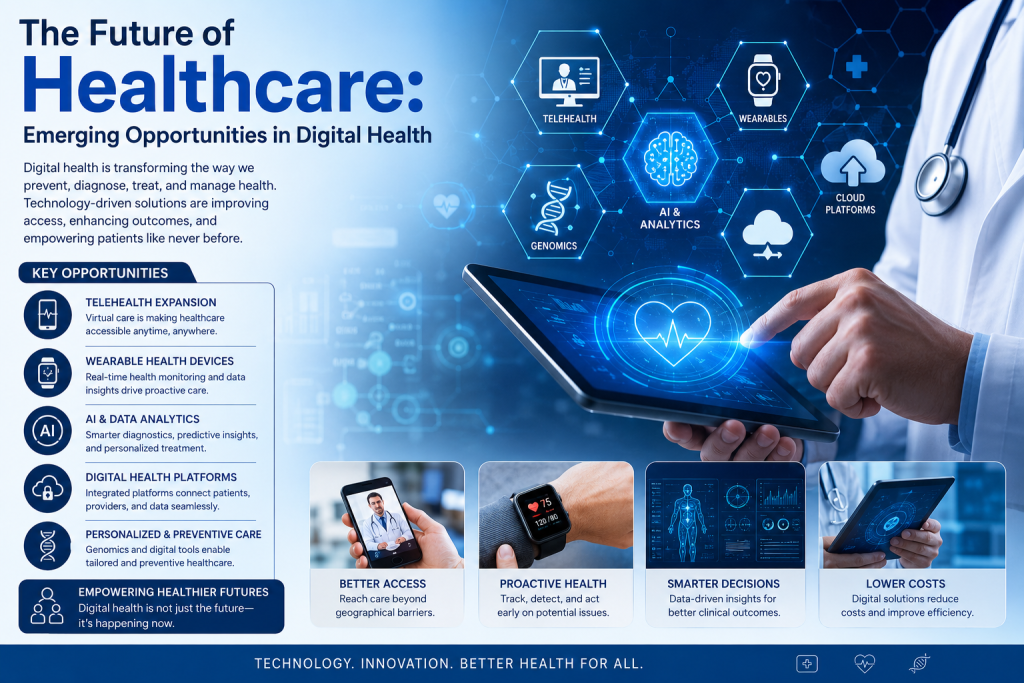

Healthcare is undergoing one of the most significant transformations in its history. Rapid advances in digital technology, artificial intelligence (AI), wearable devices, cloud computing, and telemedicine are reshaping how medical services are delivered and experienced. In 2026, digital health is no longer viewed as a supplementary service—it has become a core component of modern healthcare systems. Patients are seeking more convenient, personalized, and accessible care, while healthcare providers are embracing technology to improve outcomes and reduce costs.
The future of healthcare lies in the seamless integration of digital solutions that empower both patients and medical professionals. From virtual consultations to AI-assisted diagnostics, digital health is creating new opportunities for innovation, investment, and better patient care worldwide.
What Is Digital Health?
Digital health refers to the use of technology to improve healthcare delivery, patient outcomes, and operational efficiency. It encompasses a wide range of solutions, including telemedicine, electronic health records (EHRs), mobile health applications, wearable health devices, AI-powered diagnostics, remote patient monitoring, and digital therapeutics.
By connecting healthcare providers with patients through digital platforms, these technologies help make medical services more efficient, accessible, and data-driven.
The Rise of Telemedicine
One of the most visible developments in digital health has been the rapid growth of telemedicine. Virtual consultations allow patients to connect with healthcare professionals from the comfort of their homes, reducing travel time and improving access to specialists.
Telemedicine is particularly valuable for people living in rural or underserved areas where healthcare facilities may be limited. It also supports follow-up appointments, mental health counseling, chronic disease management, and routine consultations without requiring physical visits.
As internet connectivity and digital literacy continue to improve, telemedicine is expected to become an even more integral part of healthcare delivery.
Artificial Intelligence Is Transforming Healthcare
Artificial intelligence is revolutionizing medical decision-making by assisting healthcare professionals with faster and more accurate diagnoses. AI systems can analyze medical images, identify disease patterns, predict patient risks, and recommend personalized treatment plans.
Hospitals are also using AI to optimize administrative workflows, manage patient scheduling, improve resource allocation, and automate repetitive tasks. These capabilities allow medical staff to spend more time focusing on patient care.
As AI models continue to evolve, they are expected to support earlier disease detection, improve treatment outcomes, and enhance clinical research.
Wearable Technology Supports Preventive Care
Wearable health devices have become increasingly popular among consumers seeking to monitor their overall well-being. Smartwatches, fitness trackers, continuous glucose monitors, and heart rate sensors provide real-time health insights that encourage preventive care.
These devices can track physical activity, sleep quality, heart rhythm, blood oxygen levels, and other vital health indicators. Healthcare providers can use this information to identify potential health concerns before they become serious medical conditions.
The growing adoption of wearable technology is shifting healthcare from reactive treatment toward proactive health management.
Remote Patient Monitoring Improves Care
Remote patient monitoring enables healthcare professionals to continuously monitor patients outside traditional clinical settings. Connected medical devices automatically transmit health data to healthcare providers, allowing timely interventions when necessary.
Patients with chronic conditions such as diabetes, hypertension, cardiovascular disease, and respiratory illnesses particularly benefit from remote monitoring programs. Continuous data collection supports better treatment adherence and reduces unnecessary hospital admissions.
This approach improves patient convenience while helping healthcare systems manage increasing demand more efficiently.
Cloud Computing Strengthens Healthcare Infrastructure
Cloud technology has become the foundation for many digital health platforms. Healthcare organizations rely on cloud-based systems to securely store electronic medical records, enable collaboration among medical teams, and support advanced data analytics.
Cloud infrastructure also allows hospitals and clinics to scale digital services without investing heavily in on-premise IT infrastructure. Secure cloud environments improve accessibility while maintaining compliance with healthcare data protection standards.
As healthcare organizations continue their digital transformation, cloud computing will remain essential for supporting innovation and operational efficiency.
Personalized Medicine Becomes More Accessible
Digital health technologies are making personalized medicine more achievable than ever before. By combining patient health records, genetic information, lifestyle data, and AI-driven analytics, healthcare providers can develop customized treatment plans tailored to individual needs.
Personalized healthcare helps improve treatment effectiveness while reducing unnecessary procedures and medication side effects. Patients benefit from care that is specifically designed for their unique medical profiles rather than relying solely on standardized treatment approaches.
Business Opportunities in Digital Health
The rapid expansion of digital healthcare is creating exciting opportunities across multiple industries. Technology companies are developing AI-powered medical software, wearable devices, health applications, cybersecurity solutions, and cloud platforms designed specifically for healthcare providers.
Startups are introducing innovative digital therapeutics, virtual care platforms, and remote monitoring systems that address growing healthcare challenges. Pharmaceutical companies are also leveraging digital technologies to improve clinical trials, patient engagement, and drug development.
Investors continue to recognize digital health as one of the fastest-growing sectors in the global technology landscape, driving funding and innovation across the industry.
Challenges That Need Attention
Despite its tremendous potential, digital health also faces several challenges. Protecting patient privacy, strengthening cybersecurity, ensuring regulatory compliance, and addressing digital inequality remain top priorities.
Healthcare organizations must also invest in staff training, interoperable systems, and secure infrastructure to maximize the benefits of digital transformation. Building patient trust through transparent data practices will be essential for widespread adoption.
Looking Ahead
The future of healthcare is increasingly digital, connected, and patient-centered. Advances in artificial intelligence, telemedicine, wearable technology, cloud computing, and remote monitoring are redefining how healthcare is delivered around the world.
As innovation continues, digital health will improve accessibility, support preventive care, enable personalized treatment, and enhance healthcare efficiency. Organizations that embrace these technologies today will be better positioned to meet the evolving needs of patients while contributing to a smarter, more resilient healthcare ecosystem.