
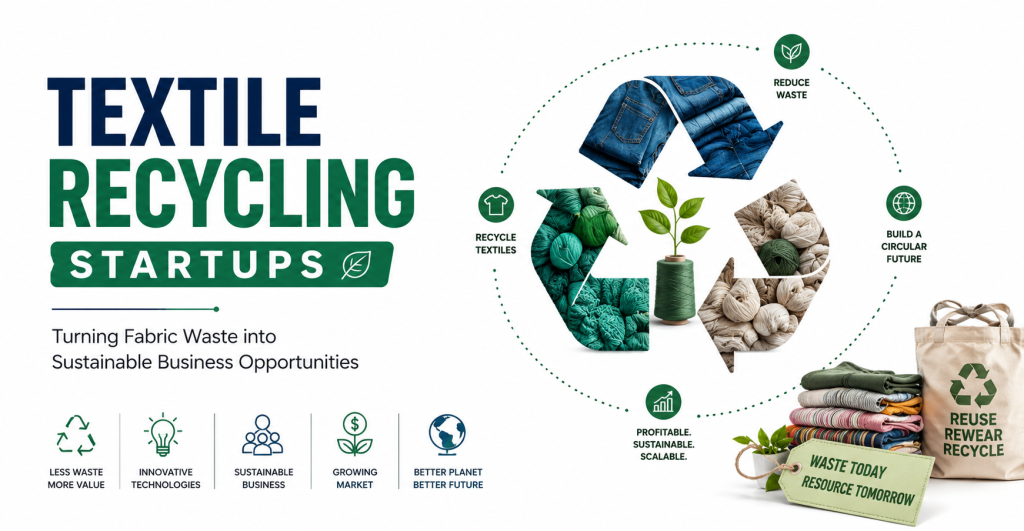

Walk into any clothing store today, and you’ll find shelves filled with the latest fashion trends at affordable prices. New collections arrive almost every season, encouraging consumers to buy more than ever before. While this has made fashion more accessible, it has also created a growing environmental challenge millions of tons of discarded textiles end up in landfills every year.
What many people see as waste, however, is becoming one of the most promising business opportunities of the decade.
Around the world, textile recycling startups are rethinking the way clothing is produced, used, and reused. Instead of allowing old garments to become waste, these innovative companies are turning discarded fabrics into valuable raw materials, creating new business models that combine sustainability with profitability.
As consumers become more environmentally conscious and governments introduce stricter regulations on waste management, textile recycling is rapidly moving from a niche concept to a mainstream industry.
Why Textile Recycling Matters More Than Ever
The fashion industry has experienced remarkable growth over the past two decades. Fast fashion has made clothing cheaper and more accessible, but it has also increased textile waste at an unprecedented rate.
Many garments are worn only a few times before being discarded. Synthetic fabrics often take decades to decompose, while valuable materials such as cotton, polyester, and wool frequently end up in landfills instead of being reused.
This growing waste problem has encouraged businesses to look beyond traditional recycling methods and embrace a circular economy, where materials remain in use for as long as possible.
Instead of viewing used clothing as rubbish, startups see it as a valuable resource waiting to be recovered.
The Rise of Textile Recycling Startups
Innovation is driving a new generation of businesses focused on giving textiles a second life.
Some startups collect unwanted clothing from households and businesses before sorting items for resale, repair, or recycling. Others use advanced technologies to separate blended fabrics into reusable fibers that can be transformed into entirely new garments.
Artificial intelligence is also playing a major role. AI-powered systems can identify different fabric types much faster and more accurately than manual sorting, reducing costs while improving recycling efficiency.
These technologies are helping startups overcome one of the biggest challenges in textile recycling processing large volumes of mixed materials quickly and economically.
Challenges That Startups Must Overcome
Despite the growing demand for sustainable fashion, textile recycling startups still face several challenges.
One of the biggest obstacles is sorting mixed fabrics. Many clothes are made from a blend of cotton, polyester, elastane, and other fibers, making recycling more complicated than processing a single material. While new technologies are improving this process, large-scale recycling remains expensive.
Another challenge is consumer awareness. Many people still throw unwanted clothes into household waste instead of donating or recycling them. Building better collection systems and educating consumers about responsible disposal will be essential for long-term success.
Cost is another factor. Virgin materials are often cheaper than recycled fibers, especially when oil prices are low. Startups must continue improving efficiency to make recycled textiles more competitive without compromising quality.
The Role of Artificial Intelligence
Artificial intelligence is becoming one of the most valuable tools in the textile recycling industry.
AI-powered sorting systems can identify different fabrics, colors, and garment types within seconds, helping recycling facilities process thousands of items every day with greater accuracy. This reduces manual work, lowers operating costs, and improves material recovery rates.
Machine learning is also helping companies predict textile waste volumes, optimize collection routes, and improve inventory management. Some startups are even using AI to analyze fashion trends and estimate future demand for recycled materials, allowing them to plan production more efficiently.
As AI technology becomes more affordable, even smaller startups will be able to adopt intelligent systems that increase productivity and reduce waste.
Opportunities Beyond Fashion
Although clothing remains the largest source of textile waste, recycled fabrics are finding applications across many industries.
Automotive manufacturers are using recycled fibers in vehicle interiors. Construction companies are incorporating recycled textiles into insulation materials. Furniture manufacturers are creating upholstery from recovered fabrics, while packaging companies are exploring textile-based sustainable alternatives.
Sportswear brands, luxury fashion labels, and home furnishing companies are also increasing their use of recycled materials to meet sustainability goals and respond to changing consumer preferences.
This growing demand across industries is creating a wider market for innovative recycling businesses.
Why Governments and Brands Are Supporting the Industry
Around the world, governments are introducing policies that encourage waste reduction, extended producer responsibility, and circular economy initiatives. These measures are encouraging businesses to rethink how products are designed, manufactured, and recycled.
At the same time, major fashion brands are setting ambitious sustainability targets by increasing the use of recycled fibers and reducing textile waste throughout their supply chains.
These commitments create long-term opportunities for startups that can provide reliable recycling technologies, collection systems, and sustainable raw materials.
As regulations become stricter, the demand for textile recycling solutions is expected to grow even further.
The Future of Textile Recycling
The future of textile recycling is likely to be driven by technology, collaboration, and innovation.
Artificial intelligence will continue improving sorting accuracy, robotics will increase automation, and advanced recycling technologies will recover higher-quality fibers from complex materials. Digital platforms will connect consumers, retailers, and recyclers more efficiently, making circular fashion easier to adopt.
Consumers are also becoming more environmentally conscious. Rather than buying products solely based on price, many shoppers now consider sustainability, transparency, and environmental impact before making purchasing decisions.
For startups, this changing consumer behavior creates an opportunity to build businesses that combine profitability with environmental responsibility.
Why Entrepreneurs Should Pay Attention
The textile recycling industry is still in its growth stage, which means there is significant room for innovation.
Entrepreneurs can develop AI-powered recycling technologies, build collection networks, create digital resale platforms, manufacture sustainable fibers, or provide software solutions that improve recycling operations.
Consulting services, logistics, quality testing, certification, and supply chain management also offer attractive business opportunities within the growing circular fashion ecosystem.
As demand continues to rise, businesses that focus on efficiency, innovation, and sustainability will be well positioned to succeed.
Final Thoughts
Textile recycling startups are proving that one industry’s waste can become another industry’s opportunity.
What was once viewed as discarded clothing is now being transformed into valuable raw materials, creating new jobs, attracting investment, and supporting a more sustainable economy. Advances in artificial intelligence, automation, and material science are making textile recycling faster, smarter, and more commercially viable than ever before.
For entrepreneurs, investors, technology providers, and fashion businesses, this is more than an environmental movement it is a rapidly growing market with long-term potential.
As the world moves toward a circular economy, textile recycling startups will play a vital role in reducing waste, conserving resources, and reshaping the future of fashion.
The next generation of successful businesses may not be those producing more clothing, but those finding innovative ways to ensure every piece of fabric gets a second life.
More Than Environmental Responsibility
While sustainability is a major driver, textile recycling is equally attractive from a business perspective.
Global demand for recycled materials continues to grow as fashion brands work toward reducing their environmental impact. Consumers increasingly prefer products made from recycled fibers, encouraging manufacturers to invest in sustainable supply chains.
This creates opportunities not only for recycling companies but also for technology providers, logistics businesses, material processors, software developers, and manufacturing partners.
In other words, textile recycling is no longer simply an environmental initiative; it is becoming an entire business ecosystem.
Business Models Creating New Opportunities
One reason textile recycling startups are attracting attention is the variety of business models emerging in the market.
Some companies focus on collecting and sorting used clothing before supplying recyclable materials to manufacturers. Others specialize in fiber-to-fiber recycling, converting old textiles into high-quality raw materials suitable for producing new garments.
Digital marketplaces are also becoming popular. These platforms connect consumers, retailers, recycling facilities, and fashion brands, making it easier to keep clothing within the circular economy for longer.
Subscription services, clothing take-back programs, repair platforms, and resale marketplaces further expand opportunities for entrepreneurs looking to enter the sustainable fashion industry.
Technology Is Changing Everything
Modern textile recycling depends heavily on technology.
Artificial intelligence helps identify fabric composition, robotics automates sorting processes, and machine vision systems improve accuracy while reducing labor costs.
Chemical recycling technologies are also advancing rapidly. Unlike traditional mechanical recycling, these innovative processes can recover fibers from complex blended fabrics, allowing materials to be reused without significantly reducing quality.
Blockchain is beginning to play a role as well by improving supply chain transparency and helping brands verify the origin of recycled materials.
Together, these innovations are making textile recycling more efficient, scalable, and commercially attractive than ever before.
Why Investors Are Paying Attention
Sustainability-focused investments continue to increase worldwide, and textile recycling has become one of the sectors attracting growing interest.
Investors recognize that governments are encouraging circular economy initiatives while major fashion brands are committing to higher levels of recycled content in future collections.
As demand for sustainable materials grows, startups capable of delivering innovative recycling solutions are positioned to benefit from expanding market opportunities.
Rather than chasing short-term trends, many investors see textile recycling as a long-term industry supported by environmental policies, consumer demand, and technological innovation.