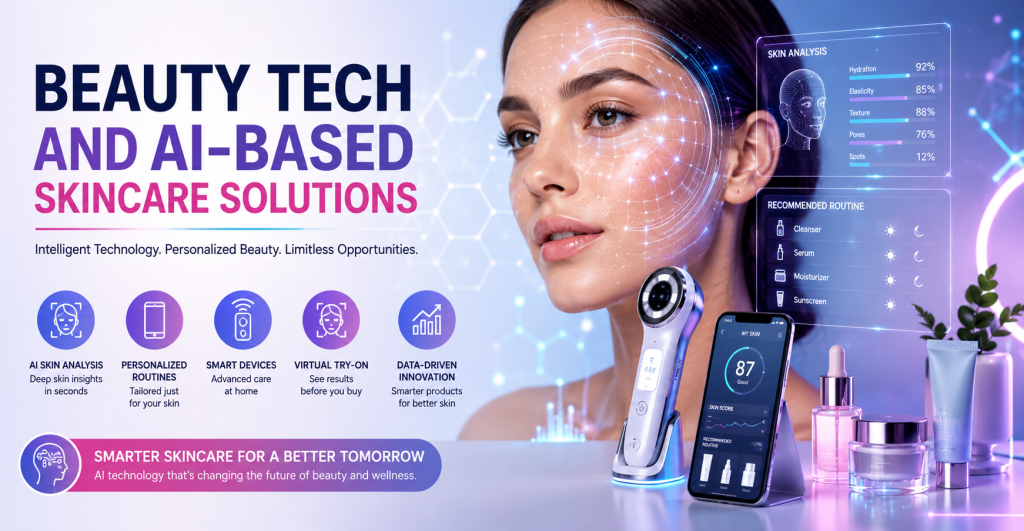

The beauty industry is undergoing one of its most significant transformations as Beauty Tech and AI-Based Skincare Solutions redefine how consumers approach skin health and personal care. Artificial intelligence, smart beauty devices, augmented reality, and data-driven skincare recommendations are creating new opportunities for brands, technology developers, healthcare professionals, and consumers alike. As digital innovation becomes deeply integrated into everyday beauty routines, personalized skincare is evolving from a luxury service into an accessible mainstream experience.
Consumers today are seeking products and services tailored to their individual skin concerns rather than relying on generalized skincare recommendations. This shift has encouraged beauty companies to adopt advanced technologies that analyze skin conditions, recommend customized routines, and monitor progress over time. The combination of AI, connected devices, and scientific research is opening new possibilities for preventive skincare while improving customer engagement across both online and offline channels.
AI Is Making Personalized Skincare More Accessible
Artificial intelligence is transforming skincare consultations by providing fast, data-driven skin assessments. Using smartphone cameras or dedicated skin scanners, AI algorithms can evaluate factors such as hydration levels, wrinkles, pigmentation, pores, acne severity, redness, and overall skin texture.
Instead of recommending the same products for everyone, AI platforms generate individualized skincare routines based on a user’s unique skin profile, age, lifestyle, environmental conditions, and skincare goals. Continuous learning allows these systems to refine recommendations as users update their skin images over time.
For consumers, this means more confidence when purchasing skincare products. For beauty brands, it creates opportunities to strengthen customer relationships through personalized digital experiences that encourage long-term loyalty.
Smart Beauty Devices Continue to Expand
The growing popularity of smart beauty devices represents another major opportunity in the beauty technology landscape. Connected skincare tools now allow consumers to perform advanced treatments from the comfort of their homes.
Popular innovations include:
- LED light therapy devices
- Smart facial cleansing brushes
- Microcurrent facial toning tools
- Ultrasonic skin cleansing systems
- Facial hydration analyzers
- AI-enabled skin scanners
Many of these devices synchronize with mobile applications, allowing users to track treatment progress, receive reminders, and adjust skincare routines based on real-time data.
As wearable health technologies continue evolving, future beauty devices may integrate additional biometric sensors capable of monitoring hydration, stress levels, sleep quality, and environmental exposure—all factors that influence skin health.
Virtual Beauty Consultations Create Digital Experiences
The rise of digital commerce has accelerated demand for virtual beauty consultations powered by artificial intelligence and augmented reality.
Consumers can now upload selfies to receive skin analysis, simulate cosmetic results, or virtually try skincare products before making a purchase. These digital experiences reduce uncertainty while increasing customer satisfaction.
Beauty advisors are increasingly combining AI-generated recommendations with professional expertise, creating hybrid consultation models that offer both automation and human guidance.
This approach helps beauty retailers improve conversion rates while providing shoppers with a more engaging online experience.
| Digital Beauty Technology | Consumer Benefit |
|---|---|
| AI Skin Analysis | Personalized skincare recommendations |
| Virtual Consultations | Convenient expert guidance from anywhere |
| AR Product Visualization | Better purchasing confidence |
| Smart Beauty Apps | Daily skincare tracking and reminders |
| Connected Devices | Real-time monitoring of skin progress |
Data-Driven Beauty Is Improving Product Development
Artificial intelligence is also changing how beauty companies develop new skincare products.
Instead of relying solely on traditional consumer surveys, manufacturers now analyze anonymized customer feedback, skin analysis data, ingredient performance, and purchasing behavior to identify emerging skincare needs.
Machine learning models help researchers predict ingredient compatibility, optimize product formulations, and identify potential market trends before they become mainstream.
This data-driven approach shortens product development cycles while allowing brands to introduce innovative formulations that better address evolving consumer expectations.
Sustainability Meets Beauty Technology
Sustainability is becoming an essential component of beauty innovation.
AI-powered recommendation systems help consumers purchase products that better match their skin needs, potentially reducing unnecessary purchases and product waste. Personalized skincare routines also encourage more efficient product usage.
Beauty technology is supporting sustainability through:
- Digital skin consultations that reduce sample waste
- Smart refill tracking for reusable packaging
- Ingredient transparency platforms
- AI-assisted formulation optimization
- Supply chain efficiency improvements
Companies are increasingly combining sustainable packaging with intelligent product recommendations to create environmentally responsible beauty experiences.
Opportunities for Healthcare and Dermatology
Beauty technology is creating new opportunities beyond cosmetics by strengthening collaboration between skincare brands and healthcare professionals.
AI-assisted skin imaging can help identify visible changes in skin conditions over time, supporting more informed conversations between patients and dermatologists. While these technologies are not replacements for medical diagnosis, they can encourage earlier professional consultations when users notice unusual skin changes.
Teledermatology platforms are also benefiting from AI-assisted image analysis, enabling remote consultations that improve access to skincare expertise, particularly in underserved regions.
As regulatory frameworks continue evolving, the integration of beauty technology with digital healthcare is expected to become increasingly sophisticated.
Emerging Technologies Will Shape the Next Generation of Beauty
Several emerging technologies are expected to further transform personalized skincare over the coming years.
Digital twins may allow consumers to simulate how skincare routines could affect their skin before purchasing products. AI-powered ingredient discovery platforms could identify new plant-based compounds with enhanced skincare benefits. Advanced sensors may continuously monitor environmental exposure, UV radiation, humidity, and pollution levels to provide real-time skincare recommendations.
Voice assistants, wearable devices, and smart mirrors are also becoming more interconnected, creating seamless beauty ecosystems that simplify daily routines.
These innovations present significant opportunities for software developers, biotechnology companies, skincare manufacturers, retailers, and wellness startups.
| Emerging Innovation | Future Opportunity |
| AI Ingredient Discovery | Faster product innovation |
| Smart Mirrors | Interactive skincare guidance |
| Digital Skin Twins | Predictive skincare simulations |
| Wearable Skin Sensors | Continuous skin monitoring |
| Connected Beauty Ecosystems | Fully personalized routines |
Consumer Education Remains Essential
While AI provides powerful insights, consumer education remains critical for maximizing the benefits of beauty technology.
Users should understand that AI recommendations complement—not replace—professional dermatological advice for persistent or serious skin conditions. Maintaining healthy skincare habits, sun protection, balanced nutrition, and proper hydration remains essential regardless of technological advancements.
Companies that combine transparent AI systems, evidence-based skincare science, and strong data privacy practices are likely to build greater consumer trust as digital beauty continues to expand.
Looking Ahead
The future of Beauty Tech and AI-Based Skincare Solutions extends far beyond convenience. Personalized skincare, intelligent beauty devices, virtual consultations, and data-driven product development are reshaping the global beauty landscape while creating exciting opportunities for innovation.
As artificial intelligence becomes more accurate and connected technologies continue to evolve, consumers can expect increasingly customized beauty experiences tailored to their unique skin profiles and wellness goals. At the same time, businesses that embrace responsible AI, sustainability, and scientific innovation will be well positioned to lead the next chapter of the beauty industry.
Beauty technology is no longer simply enhancing skincare—it is redefining how individuals understand, monitor, and care for their skin in an increasingly digital world.