
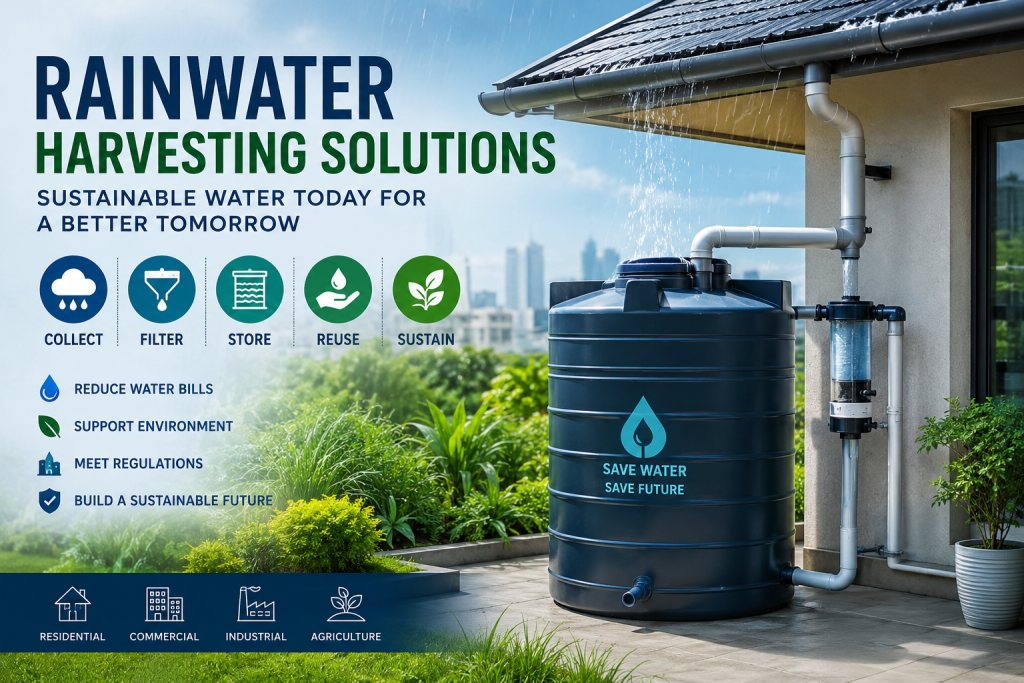

Water scarcity has become one of the world’s most pressing environmental and economic challenges. Rapid urbanization, climate change, declining groundwater levels, and unpredictable rainfall patterns are forcing governments, businesses, and homeowners to rethink how water resources are managed. Among the most practical and scalable solutions, rainwater harvesting (RWH) is emerging as a significant market opportunity across residential, commercial, industrial, and agricultural sectors.
As sustainability moves from being an option to a necessity, rainwater harvesting solutions are gaining widespread attention. Modern systems now combine smart sensors, IoT monitoring, filtration technologies, and automated storage management, making rainwater harvesting more efficient than ever before. Governments worldwide are also introducing regulations, incentives, and green building standards that encourage water conservation and decentralized water management. These factors are creating substantial business opportunities for technology providers, infrastructure developers, manufacturers, and investors.
What Are Rainwater Harvesting Solutions?
Rainwater harvesting solutions involve collecting, filtering, storing, and reusing rainwater for various applications, including:
- Residential water supply
- Landscape irrigation
- Agricultural irrigation
- Industrial process water
- Groundwater recharge
- Toilet flushing
- Commercial buildings
- Municipal infrastructure
Modern systems include rooftop collection systems, underground storage tanks, filtration units, first-flush diverters, pumps, smart monitoring devices, and automated water management software.
Why the Opportunity Is Growing
Rising Water Scarcity
Freshwater demand continues to increase while groundwater reserves decline in many regions. Water shortages have become common in both developed and developing countries, encouraging investments in alternative water sources. Rainwater harvesting offers a cost-effective solution that reduces dependence on municipal water supplies.
Government Regulations and Incentives
Many countries have made rainwater harvesting mandatory for new buildings or offer financial incentives for installation. Urban planning authorities increasingly require rainwater management as part of sustainable infrastructure projects, creating long-term demand for harvesting technologies.
Growth of Green Buildings
Green construction certifications emphasize water conservation alongside energy efficiency. Developers are integrating rainwater harvesting systems into residential apartments, commercial complexes, educational institutions, and healthcare facilities to meet sustainability standards.
Climate Change Adaptation
Extreme weather events, including heavy rainfall and prolonged droughts, have increased the importance of decentralized water management systems. Rainwater harvesting helps reduce urban flooding while providing stored water during dry periods.
Key Market Opportunities
Smart Rainwater Harvesting Systems
Technology is transforming traditional rainwater harvesting into intelligent water management.
Emerging solutions include:
- IoT-enabled tank monitoring
- AI-based rainfall prediction
- Automated water quality monitoring
- Remote maintenance alerts
- Mobile applications for water usage tracking
These smart features create opportunities for software developers, sensor manufacturers, and smart home technology providers.
Residential Sector
Homeowners are increasingly investing in rainwater harvesting systems to:
- Lower water bills
- Maintain gardens
- Reduce dependence on municipal supply
- Improve emergency water availability
Compact modular systems are making installation easier for urban homes.
Commercial Buildings
Hotels, shopping malls, office complexes, hospitals, and educational institutions consume significant volumes of water daily. Rainwater harvesting helps organizations:
- Reduce operating costs
- Meet ESG targets
- Improve sustainability ratings
- Comply with local regulations
Commercial buildings represent one of the fastest-growing customer segments.
Agriculture
Agriculture remains the world’s largest consumer of freshwater. Farmers are increasingly adopting rainwater harvesting for:
- Crop irrigation
- Livestock watering
- Greenhouse operations
- Farm ponds
- Groundwater recharge
This creates opportunities for irrigation equipment manufacturers and agricultural technology companies.
Industrial Applications
Manufacturing facilities require substantial quantities of water for cooling, cleaning, and processing. Industries are investing in rainwater harvesting to improve resource efficiency while reducing environmental impact.
Industries showing high adoption include:
- Food processing
- Chemicals
- Pharmaceuticals
- Automotive manufacturing
- Textile production
Emerging Business Trends
Several innovations are reshaping the rainwater harvesting industry:
| Trend | Opportunity |
|---|---|
| Smart IoT Monitoring | Remote system management |
| Modular Storage Tanks | Easy residential installation |
| Advanced Filtration | Improved water quality |
| AI Water Analytics | Better usage optimization |
| Green Infrastructure | Sustainable urban planning |
| Integrated Building Systems | Smart city development |
Investment Opportunities
The sector presents opportunities across multiple business categories:
- Rainwater storage tank manufacturers
- Smart sensor companies
- Water filtration providers
- Civil engineering firms
- Green construction companies
- IoT solution developers
- Environmental consulting firms
- Sustainable infrastructure investors
Growing ESG investments are also encouraging funding for innovative water management startups.
Challenges to Address
Despite strong growth potential, several barriers remain:
- High upfront installation costs
- Limited awareness in some regions
- Maintenance requirements
- Variable rainfall patterns
- Regulatory differences between countries
However, technological innovation and supportive government policies continue to reduce these challenges over time.
Future Outlook
The future of rainwater harvesting solutions looks promising as global concerns around water security continue to intensify. Governments are expanding conservation programs, businesses are prioritizing sustainability, and consumers are becoming more environmentally conscious. Smart technologies such as IoT-enabled monitoring, AI-powered water management, and integrated building automation are expected to accelerate adoption across both developed and emerging markets.
As cities become smarter and climate resilience becomes a policy priority, rainwater harvesting will likely evolve from a supplementary system into an essential component of modern infrastructure. Organizations that invest early in innovative, efficient, and scalable rainwater harvesting technologies are well positioned to capitalize on the growing demand for sustainable water management solutions.
Conclusion
Rainwater harvesting solutions represent one of the most promising opportunities in sustainable infrastructure and water conservation. Driven by increasing water scarcity, supportive government policies, smart technology adoption, and growing environmental awareness, the sector offers significant growth potential for manufacturers, technology providers, investors, construction companies, and service providers.
Businesses that focus on innovation, digital monitoring, efficient filtration, and integrated water management systems will be best positioned to benefit from the expanding global demand for resilient and sustainable water solutions.