
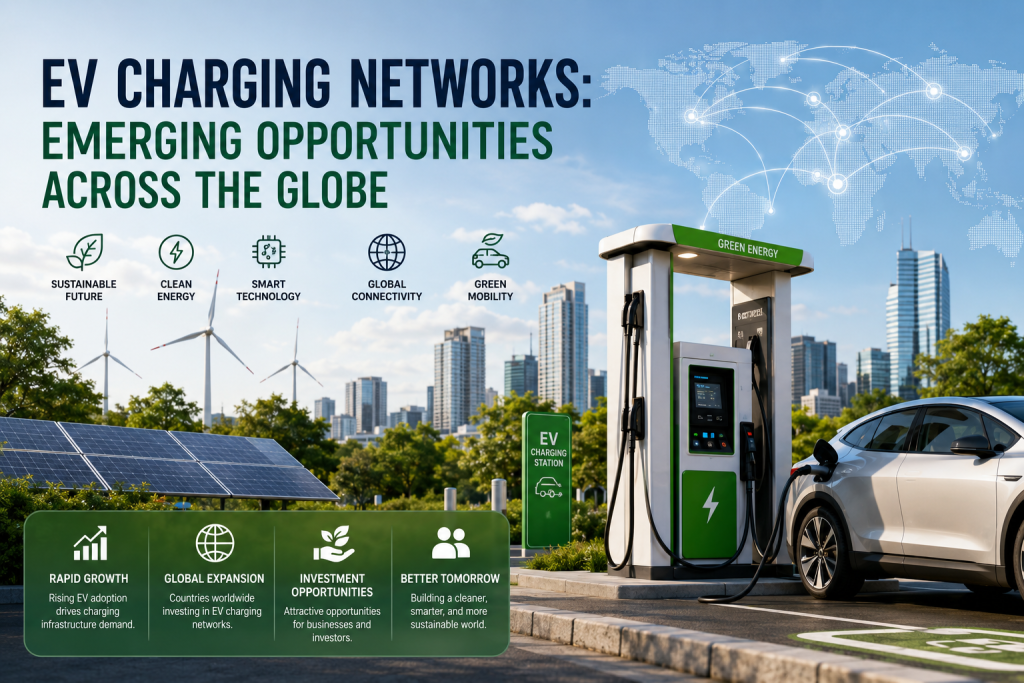

The rapid adoption of electric vehicles (EVs) is transforming the global transportation industry, making EV charging networks one of the fastest-growing infrastructure opportunities of 2026. As governments, businesses, and consumers embrace cleaner mobility solutions, the demand for accessible, reliable, and fast charging stations continues to rise across developed and emerging economies.
EV charging networks are no longer viewed as supporting infrastructure—they have become a strategic investment opportunity for energy companies, technology providers, real estate developers, retailers, and entrepreneurs. As the transition toward sustainable transportation accelerates, expanding charging infrastructure is creating new business opportunities across multiple industries.
Expanding Opportunities for Infrastructure Investment
One of the biggest opportunities created by EV charging networks is the growing need for large-scale infrastructure development. Millions of new charging stations will be required over the coming years to support the increasing number of electric vehicles on the road.
Governments are introducing funding programs, tax incentives, and public-private partnerships to encourage infrastructure expansion. Private investors, utilities, and infrastructure companies are actively investing in charging projects to meet future demand. Businesses that participate early in this ecosystem can benefit from long-term revenue opportunities while supporting the global shift toward clean transportation.
Growing Business Opportunities for Retail and Commercial Properties
Retail centers, shopping malls, hotels, office complexes, restaurants, and commercial buildings are increasingly installing EV charging stations to attract customers and enhance visitor experiences.
Charging stations encourage longer customer visits, creating opportunities for businesses to increase spending on retail, dining, and other services while vehicles are being charged. Property owners also gain a competitive advantage by offering value-added amenities that appeal to the growing population of EV drivers.
As electric vehicle ownership expands, commercial properties equipped with charging facilities are expected to become increasingly attractive to customers and tenants.
Opportunities for Technology and Software Providers
The growth of EV charging networks extends beyond physical infrastructure. Advanced software platforms are becoming essential for managing charging stations, monitoring energy usage, processing digital payments, and optimizing network performance.
Technology companies are developing intelligent charging management systems, mobile applications, reservation platforms, and predictive maintenance solutions that improve user experiences and operational efficiency. Artificial intelligence and data analytics are also helping network operators balance electricity demand, reduce downtime, and optimize charging schedules.
These innovations are creating significant opportunities for software developers and digital service providers within the evolving EV ecosystem.
Supporting Renewable Energy Integration
EV charging networks are increasingly being integrated with renewable energy sources such as solar and wind power. Smart charging solutions combined with battery energy storage systems help reduce pressure on electrical grids while improving energy efficiency.
Utilities and clean energy companies are investing in renewable-powered charging stations that support sustainability goals and reduce operating costs. These developments create opportunities for businesses involved in energy storage, solar installation, grid management, and sustainable infrastructure.
As countries continue investing in clean energy, the combination of renewable power and EV charging infrastructure is expected to become an important driver of future growth.
Creating Opportunities for Entrepreneurs and Startups
The rapid expansion of charging infrastructure is opening doors for entrepreneurs developing innovative products and services within the EV ecosystem.
Startups are introducing mobile charging services, charging station installation businesses, fleet charging management platforms, charging equipment maintenance solutions, and subscription-based charging services. Others are focusing on smart payment technologies, location discovery platforms, and energy optimization software.
As the industry continues to mature, entrepreneurs have numerous opportunities to address emerging challenges and improve the accessibility and efficiency of EV charging networks.
Driving Demand for Skilled Professionals
The continued deployment of EV charging infrastructure is increasing demand for professionals with expertise in electrical engineering, renewable energy, software development, cybersecurity, project management, and network operations.
Companies require skilled workers to design, install, maintain, and operate charging stations while ensuring safety, reliability, and regulatory compliance. Digital specialists are also needed to develop intelligent charging platforms and manage connected infrastructure.
This growing workforce demand is encouraging training programs and creating new career opportunities across the clean energy and transportation sectors.
Accelerating Fleet Electrification
Commercial fleets are rapidly transitioning toward electric mobility to reduce fuel costs and achieve sustainability targets. Logistics providers, public transportation agencies, delivery companies, and corporate fleets require dedicated charging infrastructure to support daily operations.
Fleet charging solutions offer opportunities for infrastructure developers, equipment manufacturers, software providers, and energy companies to deliver customized charging systems that improve efficiency and reduce operational costs.
As businesses continue electrifying their vehicle fleets, demand for scalable and reliable charging networks is expected to grow significantly.
Encouraging Innovation Across the Mobility Ecosystem
EV charging networks are driving innovation throughout the broader mobility industry. Companies are exploring ultra-fast charging technologies, wireless charging systems, vehicle-to-grid (V2G) capabilities, and intelligent energy management solutions that enhance charging convenience and grid stability.
Automotive manufacturers, utilities, technology firms, and charging operators are collaborating to create integrated mobility ecosystems that deliver seamless charging experiences for consumers and businesses alike.
As innovation continues, EV charging networks will play a central role in supporting the future of connected, intelligent, and sustainable transportation.
Looking Ahead
EV charging networks are becoming a cornerstone of the global transition toward electric mobility. By enabling widespread EV adoption, supporting renewable energy integration, and creating new business models, charging infrastructure is generating opportunities across transportation, energy, technology, real estate, and retail industries.
Businesses can invest in charging infrastructure, entrepreneurs can develop innovative mobility solutions, and professionals can build valuable skills in one of the world’s fastest-evolving sectors. As governments continue promoting clean transportation and EV adoption accelerates worldwide, EV charging networks are expected to remain one of the most promising infrastructure opportunities throughout 2026 and beyond.
Organizations that invest in scalable charging solutions, digital technologies, and sustainable energy integration today will be well positioned to benefit from the long-term evolution of the global electric mobility ecosystem.