
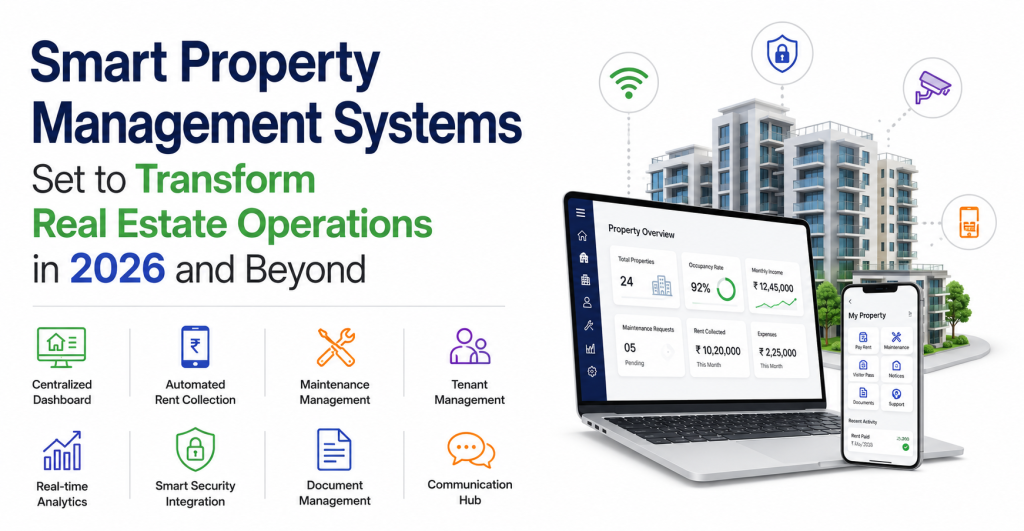

The real estate industry is undergoing a major digital shift as Smart Property Management Systems emerge as a powerful solution for landlords, housing societies, real estate developers, and facility managers. These systems combine automation, data analytics, IoT integration, and cloud-based tools to simplify how properties are managed, maintained, and monetized.
With rising urbanization, increasing rental demand, and growing expectations from tenants, traditional property management methods are no longer efficient. Smart Property Management Systems are stepping in to fill this gap by making operations faster, more transparent, and more cost-effective.
What Are Smart Property Management Systems?
Smart Property Management Systems are digital platforms that help manage residential, commercial, and mixed-use properties through technology. Instead of manual registers, phone calls, and scattered spreadsheets, these systems provide a centralized dashboard where property owners and managers can:
- Track rent collection and payments automatically
- Manage maintenance requests in real-time
- Monitor tenant behavior and occupancy
- Schedule repairs and vendor services
- Generate automated financial reports
- Control access systems (smart locks, security integrations)
- Communicate with tenants through apps or portals
Growing Need for Smart Property Management
In recent years, the increasing complexity of managing multiple properties has created a strong demand for smarter, more efficient solutions. Traditional methods involving spreadsheets, manual tracking, and phone-based communication are no longer sufficient in a fast-paced urban environment. Smart Property Management Systems solve this problem by providing a centralized digital platform where all property operations can be managed in one place. Through cloud-based dashboards and mobile applications, property owners can monitor and control their assets from anywhere.
Rising Tenant Expectations Driving Adoption
A major factor behind the growth of these systems is the rising expectation of tenants for convenience and transparency. Modern tenants prefer digital-first experiences, including online rent payments, instant complaint registration, automated receipts, and clear billing structures. Smart Property Management Systems meet these expectations by automating rent collection, sending timely reminders, and ensuring accurate transaction records. This improves tenant satisfaction while also ensuring consistent and timely payments for property owners.
Maintenance and Operations Automation
Maintenance management is one of the most important features of Smart Property Management Systems. Instead of manual coordination, tenants can submit maintenance requests through mobile apps or web portals. The system automatically assigns tasks to available vendors, tracks progress in real time, and provides updates to both tenants and property owners. This reduces delays, improves accountability, and ensures faster resolution of issues, ultimately improving property value and tenant retention.
Data Analytics and Financial Insights
These systems also offer advanced analytics and reporting tools that help property owners make better financial decisions. Key insights such as occupancy rates, monthly rental income, expenses, and maintenance costs are displayed through easy-to-understand dashboards. This data-driven approach allows owners to optimize rental pricing, reduce unnecessary expenses, and improve long-term property profitability.
Security and Digital Infrastructure
Security and documentation management are also becoming essential components of modern property systems. Many platforms now integrate with smart security devices such as CCTV systems, biometric access controls, and digital locks. Additionally, important documents like rental agreements, invoices, and compliance records are stored securely in digital format, reducing paperwork and improving accessibility.
Role of Artificial Intelligence in Property Management
Artificial Intelligence is further enhancing the capabilities of Smart Property Management Systems. AI-driven tools can predict maintenance issues before they occur, automate tenant screening, and provide chatbot-based customer support. These technologies are shifting property management from a reactive process to a proactive and predictive system, reducing operational risks and improving efficiency.
Market Growth and Opportunities
The demand for Smart Property Management Systems is growing rapidly, especially in urban areas with high rental density. In countries like India, where rental housing, co-living spaces, and commercial real estate are expanding, the opportunity for digital property solutions is significant. Global markets are also witnessing similar trends, particularly in developing urban economies and rapidly growing cities.
Challenges in Adoption
Despite strong benefits, adoption challenges still exist. Many small property owners still rely on traditional methods due to limited digital awareness and resistance to change. Initial onboarding complexity and concerns about data security also act as barriers. However, as platforms become more user-friendly and awareness increases, adoption rates are expected to grow significantly.
Future Outlook of Smart Property Systems
The future of Smart Property Management Systems is expected to include deeper automation and integration with emerging technologies. This may include AI-powered property valuation, blockchain-based ownership records, fully automated leasing systems, and integration with smart city infrastructure. These advancements will significantly reduce manual intervention and transform real estate operations at scale.
Conclusion
Smart Property Management Systems represent a major shift in the real estate industry, offering a more efficient, transparent, and scalable way to manage properties. As technology continues to evolve and adoption increases, these systems are expected to become a standard tool in modern real estate management, reshaping how properties are owned, operated, and experienced globally.