
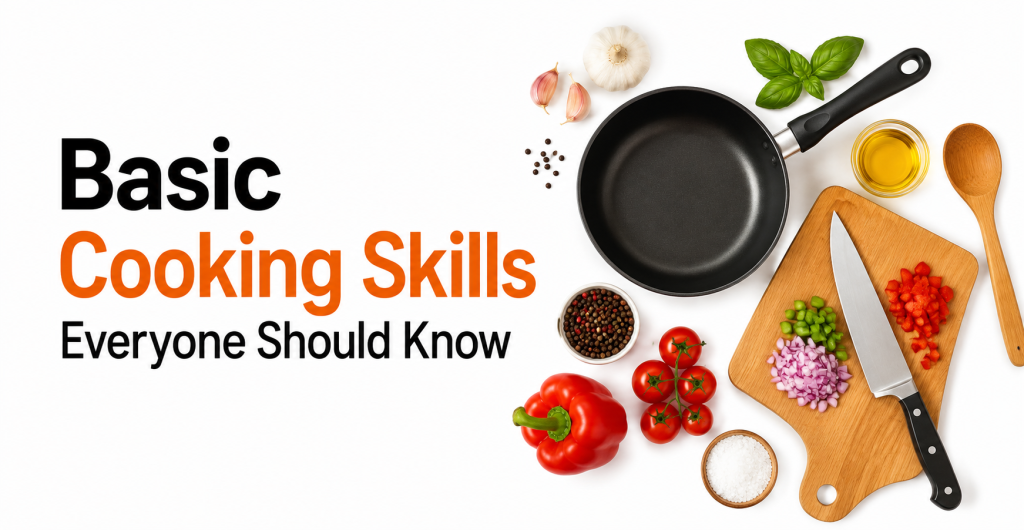

Cooking is no longer viewed as merely a household responsibility; it has become an essential life skill that supports healthier living, financial savings, and greater self-sufficiency. As home cooking continues to gain popularity due to rising food costs, increased health awareness, and the influence of digital food content, learning fundamental kitchen techniques has become more valuable than ever. Whether preparing quick weekday meals or experimenting with new cuisines, mastering the basics creates a strong foundation for culinary confidence. Developing these skills also reduces food waste, improves meal quality, and encourages better nutritional choices. Understanding the Basic Cooking Skills Everyone Should Know allows beginners and experienced home cooks alike to prepare meals efficiently while adapting to changing food trends and dietary preferences.
Why Basic Cooking Skills Matter More Than Ever
The modern food landscape has changed significantly over the past decade. Consumers are increasingly prioritizing fresh ingredients, minimally processed foods, and personalized nutrition plans. At the same time, the availability of online recipes, cooking tutorials, and smart kitchen appliances has made cooking more accessible than previous generations. However, technology alone cannot replace practical kitchen knowledge. Essential techniques such as proper knife handling, temperature control, ingredient preparation, and seasoning remain the foundation of successful cooking regardless of cuisine or recipe complexity.
Learning these core skills also supports long-term health goals. Home-cooked meals generally provide greater control over ingredients, sodium levels, sugar content, and portion sizes. Families that regularly cook at home often enjoy a wider variety of vegetables, lean proteins, and whole grains while reducing dependence on highly processed convenience foods. As consumers continue embracing wellness-focused lifestyles, practical cooking knowledge has become a valuable investment in both health and financial well-being.
Essential Kitchen Techniques Every Home Cook Should Master
Strong cooking begins with mastering a few fundamental techniques that apply across thousands of recipes. Rather than memorizing individual dishes, learning universal cooking methods allows greater flexibility and creativity in the kitchen.
Knife Skills and Food Preparation
Proper knife skills improve both efficiency and safety. Understanding how to dice onions, slice vegetables evenly, mince garlic, and trim meat ensures ingredients cook consistently. Uniform cuts also enhance presentation while reducing cooking time. Maintaining sharp knives is equally important because dull blades require more force and increase the likelihood of accidents.
Heat Control and Cooking Methods
One of the biggest challenges for beginners is understanding how heat affects food. High heat works well for searing proteins and creating caramelization, while medium or low heat is better suited for simmering sauces, cooking grains, or preparing delicate ingredients. Recognizing when to sauté, roast, grill, steam, boil, or bake allows cooks to maximize flavor without overcooking or drying out ingredients.
Seasoning and Flavor Balance
Successful cooking depends on balancing flavors rather than simply following measurements. Salt enhances natural flavors, acids such as lemon juice or vinegar brighten dishes, herbs provide freshness, and spices add complexity. Learning how these ingredients interact enables cooks to adjust recipes according to personal taste while creating more satisfying meals.
Practical Cooking Skills That Build Long-Term Confidence
Beyond individual techniques, several practical habits help home cooks prepare meals more efficiently and consistently.
- Read an entire recipe before beginning preparation.
- Measure ingredients accurately when baking or trying new recipes.
- Organize ingredients before cooking to improve workflow.
- Understand safe food handling and proper storage practices.
- Taste food throughout cooking instead of seasoning only at the end.
- Learn basic substitutions for common ingredients when supplies are limited.
- Practice proper cleaning habits to maintain an organized workspace.
These habits reduce mistakes, improve consistency, and help beginners develop professional kitchen discipline that becomes second nature over time.
Modern Food Trends Are Expanding Culinary Opportunities
Growing consumer interest in healthy eating, sustainability, and international cuisines is encouraging more people to develop cooking skills. Plant-based meals, high-protein recipes, fermented foods, meal preparation strategies, and global flavors have become increasingly popular across households. As ingredient availability expands through online grocery platforms and specialty retailers, home cooks now have access to diverse products that were previously difficult to obtain.
Smart kitchen technology is also transforming the cooking experience. Digital thermometers, induction cooktops, multicookers, precision cooking devices, and AI-assisted recipe applications simplify meal preparation while improving consistency. These innovations make cooking more approachable for beginners while enabling experienced cooks to refine their techniques. Rather than replacing foundational knowledge, these tools complement traditional skills and improve overall kitchen efficiency.
Building Skills That Last a Lifetime
Developing strong cooking fundamentals is a gradual process built through regular practice rather than perfection. Every meal prepared provides an opportunity to improve timing, flavor balance, ingredient handling, and overall confidence. As food preferences continue evolving alongside changing lifestyles and nutrition trends, individuals with strong foundational cooking abilities remain better equipped to adapt their meals to new dietary recommendations, seasonal ingredients, and personal health goals.
The long-term value of mastering the Basic Cooking Skills Everyone Should Know extends far beyond preparing everyday meals. These skills support healthier living, reduce unnecessary food expenses, encourage creativity, and foster greater appreciation for quality ingredients. In an increasingly health-conscious world where consumers seek both convenience and nutrition, practical cooking knowledge continues to be one of the most valuable lifelong investments anyone can make.