
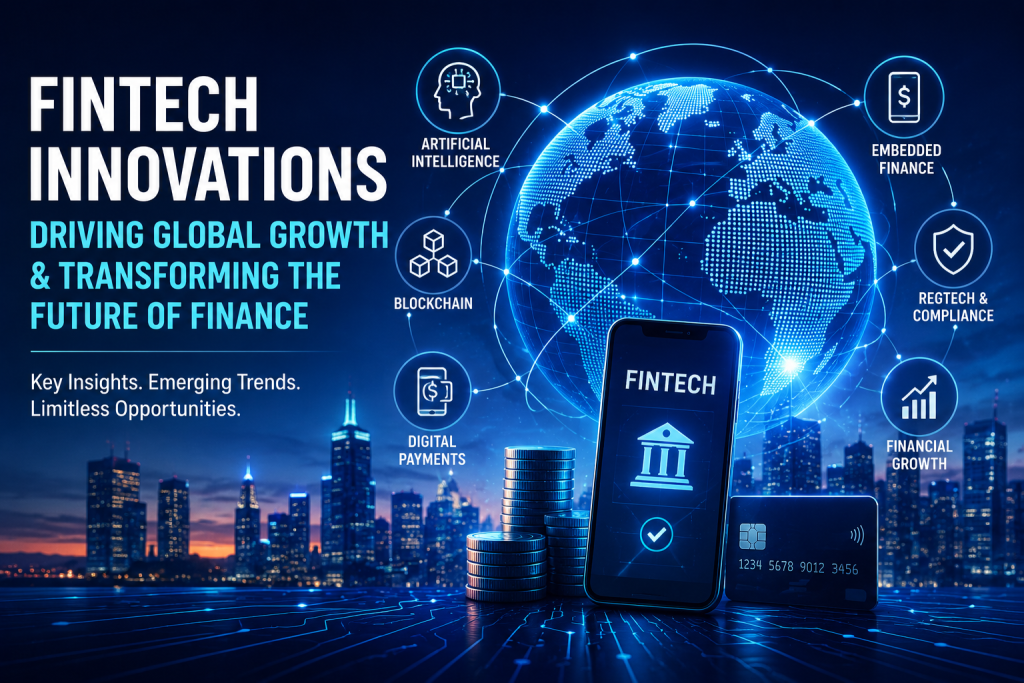

Financial technology has evolved from being a disruptive force into a cornerstone of the global financial ecosystem. Over the past decade, fintech innovations have fundamentally transformed how individuals, businesses, and governments access financial services. From AI-powered banking and blockchain-enabled transactions to embedded finance and digital payment ecosystems, fintech is accelerating financial inclusion while reshaping the future of global commerce.
Despite a more cautious investment environment, the sector continues to demonstrate remarkable resilience. According to Qubit Capital, fintech innovation is being driven by artificial intelligence, blockchain technology, embedded finance, and regulatory technology (RegTech), all of which are creating new opportunities for startups, investors, and financial institutions worldwide. At the same time, emerging markets across Latin America, Southeast Asia, the Middle East, and Europe are becoming key destinations for fintech expansion as digital adoption continues to accelerate.
Artificial Intelligence Is Redefining Financial Services
Artificial intelligence has become one of the most influential technologies shaping the fintech landscape. Financial institutions are leveraging AI to automate operations, enhance customer experiences, strengthen fraud detection, and improve decision-making through predictive analytics.
AI-powered chatbots now provide 24/7 customer support, while intelligent credit assessment models enable lenders to evaluate borrowers more accurately using alternative data sources. Financial advisors are also integrating AI-driven recommendation engines that deliver personalized investment strategies based on individual financial goals and risk profiles.
As machine learning models continue to evolve, AI is expected to play an even greater role in improving operational efficiency, reducing costs, and delivering highly personalized financial services.
Blockchain Continues to Build Trust Across Financial Ecosystems
Blockchain technology has moved beyond cryptocurrencies to become a foundational component of modern financial infrastructure. Its decentralized architecture provides enhanced transparency, security, and transaction integrity, making it increasingly valuable across payments, trade finance, digital identity verification, and cross-border settlements.
Financial institutions are exploring blockchain solutions to reduce transaction costs, improve settlement speeds, and eliminate inefficiencies associated with traditional intermediaries. The technology is also supporting the growth of decentralized finance (DeFi), allowing users to access lending, borrowing, and investment services through blockchain-based platforms.
As regulatory clarity improves globally, blockchain adoption is expected to expand across both traditional banking systems and emerging digital financial services.
Embedded Finance Is Changing Consumer Expectations
One of the fastest-growing trends within fintech is embedded finance—the integration of financial services directly into non-financial platforms. Consumers can now access payment solutions, insurance products, lending services, and investment options while shopping online, booking travel, or using business software.
This seamless integration improves customer convenience while creating new revenue opportunities for businesses. Rather than directing customers to traditional banks or financial institutions, companies are increasingly embedding financial products directly into their digital ecosystems.
As digital commerce continues to expand, embedded finance is expected to become a defining feature of customer experience across multiple industries.
Regulatory Technology Is Strengthening Compliance
Innovation in financial services must be accompanied by robust compliance frameworks. Regulatory Technology, commonly known as RegTech, is helping financial institutions automate compliance processes while reducing operational complexity.
Advanced compliance platforms use artificial intelligence to monitor transactions, detect suspicious activities, verify customer identities, and generate regulatory reports with greater accuracy. These technologies enable organizations to meet evolving regulatory requirements while minimizing manual workloads and improving risk management.
For fintech startups operating across multiple jurisdictions, RegTech has become an essential investment that supports both scalability and long-term sustainability.
Emerging Markets Offer Significant Growth Potential
While North America and Europe continue leading fintech innovation, emerging economies are rapidly becoming important growth engines.
Countries across Latin America, Southeast Asia, the Middle East, and Africa are witnessing increasing smartphone penetration, expanding internet connectivity, and growing demand for digital financial services. Millions of previously unbanked individuals are gaining access to banking, digital wallets, lending platforms, and investment services through fintech applications.
Supportive government policies and increasing venture capital interest are further accelerating innovation in these high-growth regions, creating substantial opportunities for entrepreneurs and investors alike.
Challenges Remain Despite Strong Momentum
Although fintech continues to expand globally, the industry faces several challenges that require careful navigation.
Regulatory uncertainty remains a significant concern as governments work to establish comprehensive frameworks for emerging technologies such as artificial intelligence, digital assets, and decentralized finance. Cybersecurity threats continue evolving alongside increasing digital adoption, requiring organizations to invest heavily in data protection and fraud prevention.
In addition, tighter capital markets have made fundraising more competitive, encouraging startups to prioritize sustainable growth, operational efficiency, and clear paths to profitability. Despite these challenges, industry experts remain optimistic about fintech’s long-term trajectory due to continued technological innovation and strong consumer demand.
The Future of Fintech Innovation
The next phase of fintech evolution will likely be defined by greater collaboration between financial institutions, technology providers, regulators, and investors. Artificial intelligence, blockchain, cloud computing, embedded finance, and quantum technologies are expected to create increasingly sophisticated financial ecosystems that deliver faster, more secure, and highly personalized services.
Organizations that successfully combine technological innovation with regulatory compliance and customer-centric design will be well positioned to lead the future of financial services.
Conclusion
Fintech has become far more than a technology trend—it is reshaping the global economy by making financial services more accessible, intelligent, and efficient. As artificial intelligence, blockchain, embedded finance, and regulatory technologies continue to mature, they will unlock new opportunities for businesses, investors, and consumers across both developed and emerging markets.
The pace of innovation may continue to evolve alongside regulatory frameworks and investment cycles, but one trend remains clear: fintech will remain a key driver of global economic growth, financial inclusion, and digital transformation for years to come.