
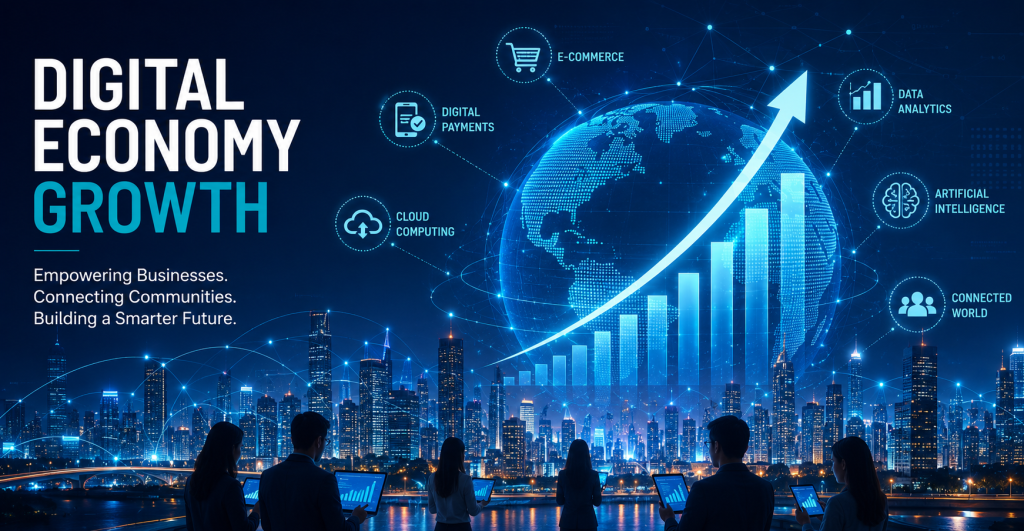

The digital economy growth is reshaping industries worldwide by accelerating innovation, improving connectivity, and creating new possibilities for businesses, consumers, and governments. As technology becomes deeply integrated into everyday activities, companies are adopting digital solutions to improve efficiency, reach new customers, and develop modern business models. From cloud platforms and artificial intelligence to digital payments and data-driven strategies, the digital economy is becoming a major force behind global transformation.
Businesses across sectors are moving beyond traditional operations and embracing technology-driven approaches to remain competitive. Digital platforms are enabling organizations to expand their reach, streamline processes, and deliver personalized experiences. This rapid shift is creating a new business landscape where innovation, adaptability, and digital capabilities play a central role in long-term growth.
Technology Driving the Evolution of Modern Businesses
One of the biggest factors influencing the digital economy is the rapid adoption of advanced technologies. Artificial intelligence, cloud computing, automation, and data analytics are helping businesses make faster decisions and improve operational performance.
Artificial intelligence is becoming a key tool for organizations looking to enhance customer service, automate repetitive tasks, and analyze large volumes of information. Businesses are using AI-powered solutions for marketing, forecasting, cybersecurity, and personalized recommendations, creating more efficient and intelligent operations.
Cloud technology is also transforming how companies manage their infrastructure. By moving services and data to cloud platforms, organizations can reduce operational complexity, improve flexibility, and support remote collaboration. This has become especially important as businesses continue to prioritize digital-first strategies.
Growth of Digital Payments and Financial Technology
The expansion of digital payment systems is another major development shaping the digital economy. Consumers are increasingly adopting online transactions, mobile wallets, and contactless payment methods due to convenience and speed.
Financial technology companies are introducing innovative solutions that improve access to banking services and create easier ways for businesses and customers to manage financial activities. Digital banking, online lending platforms, and payment technologies are changing the traditional financial ecosystem.
Small and medium-sized businesses are also benefiting from digital financial tools that allow them to accept payments, manage operations, and connect with customers more effectively. The growing adoption of these technologies is helping create a more connected and accessible financial environment.
E-Commerce and Changing Consumer Behavior
The rise of e-commerce has significantly influenced the digital economy by changing how people shop and interact with brands. Online marketplaces, social commerce, and mobile shopping platforms are creating new ways for businesses to connect with consumers.
Modern customers expect faster services, personalized recommendations, and seamless digital experiences. Companies are responding by investing in customer analytics, automated support systems, and digital marketing strategies.
Social media platforms are also becoming powerful business channels, allowing brands to promote products, engage audiences, and build direct relationships with customers. The combination of technology and changing consumer expectations is driving continuous innovation in the retail sector.
Data-Driven Business Strategies
Data has become one of the most valuable assets in the digital economy. Companies are using analytics tools to understand customer preferences, improve decision-making, and identify emerging trends.
Data-driven strategies allow businesses to optimize pricing, enhance product development, and create more targeted marketing campaigns. As organizations collect and analyze more information, the ability to convert data into meaningful insights is becoming a competitive advantage.
Businesses that effectively use data technologies can respond faster to market changes and develop solutions that better match customer needs.
Digital Transformation Across Industries
The impact of the digital economy extends across multiple industries, including healthcare, manufacturing, transportation, education, and entertainment.
In healthcare, digital platforms are improving access to services through telemedicine, electronic health records, and remote monitoring solutions. Technology is helping healthcare providers deliver more efficient and personalized care.
Manufacturing industries are adopting automation, robotics, and smart factory technologies to improve production processes. Connected systems and real-time monitoring are helping companies increase productivity and reduce operational challenges.
The transportation sector is also experiencing major changes through connected vehicles, intelligent mobility solutions, and digital infrastructure. These advancements are creating more efficient and sustainable transportation networks.
Role of Artificial Intelligence in Future Growth
Artificial intelligence is expected to remain one of the most influential technologies shaping the digital economy. Businesses are exploring AI applications to improve productivity, enhance creativity, and develop new services.
Generative AI tools are helping organizations create content, automate workflows, and support decision-making. As AI technology continues to evolve, companies are focusing on responsible implementation, security, and workforce adaptation.
The combination of AI with other technologies such as cloud computing and advanced analytics is expected to accelerate digital innovation across industries.
Challenges in the Digital Economy Expansion
Despite strong growth, the digital economy also faces challenges. Data privacy, cybersecurity risks, digital skills shortages, and technology access gaps remain important concerns.
Businesses must invest in secure digital infrastructure and employee training to successfully navigate the changing technology environment. Governments and organizations are also working toward creating policies that support safe and inclusive digital development.
Building trust and ensuring responsible technology usage will be essential for sustainable digital progress.
Future Outlook
The digital economy is expected to continue expanding as businesses and consumers increasingly rely on technology-driven solutions. Emerging innovations such as AI, automation, smart devices, and advanced connectivity will continue influencing how industries operate.
Companies that embrace digital transformation and adapt to changing technology trends will be better positioned to succeed in the evolving global marketplace. The future of business will increasingly depend on digital capabilities, innovation, and the ability to create value through technology.
As digital ecosystems continue to grow, technology will remain a powerful force shaping economic development, business strategies, and everyday experiences worldwide.