

Introduction
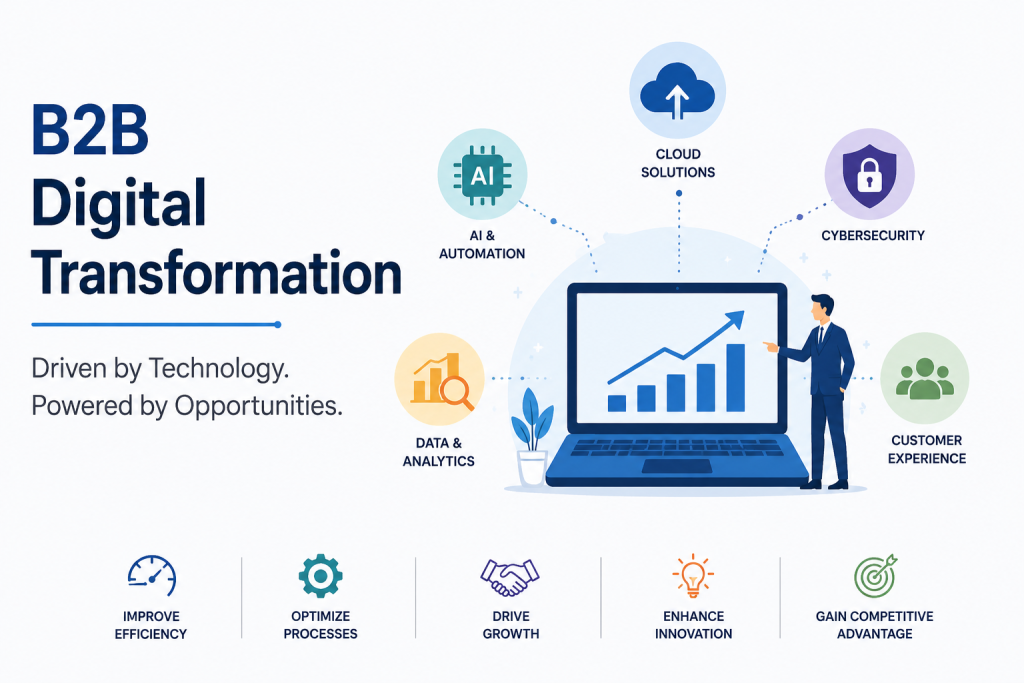
B2B digital transformation is reshaping how companies operate, connect with customers, and create value in an increasingly competitive business environment. Organizations across industries are adopting digital technologies to improve efficiency, enhance customer experiences, automate processes, and build more flexible business models. Unlike traditional technology upgrades, digital transformation focuses on creating a complete shift in how businesses deliver products, services, and solutions.
As companies continue to move toward smarter operations, data-driven decision-making, and connected ecosystems, B2B digital transformation is creating significant opportunities for technology providers, enterprises, and service innovators. Businesses that successfully integrate digital solutions can improve productivity, strengthen partnerships, and respond faster to changing market demands.
Growing Importance of Digital Transformation in B2B Markets
B2B companies are experiencing increased pressure to modernize their operations due to evolving customer expectations and rapid technological advancements. Business buyers now expect seamless digital interactions, personalized experiences, and faster service delivery similar to consumer platforms.
Digital transformation enables organizations to streamline complex processes, reduce operational challenges, and improve collaboration across departments and supply chains. From cloud-based platforms to artificial intelligence-powered analytics, companies are investing in solutions that support long-term growth and competitiveness.
The shift toward digital-first business models is opening opportunities for software developers, consulting firms, cybersecurity providers, cloud service companies, and automation specialists. These businesses are helping organizations transition from traditional systems to more connected and intelligent environments.
Key Opportunities Driving B2B Digital Transformation
1. Cloud Adoption and Scalable Business Solutions
Cloud technology has become one of the most important drivers of B2B transformation. Businesses are moving away from traditional infrastructure and adopting cloud platforms to improve flexibility, accessibility, and cost efficiency.
Cloud-based solutions allow companies to manage operations remotely, scale resources according to demand, and integrate multiple business functions. This creates opportunities for cloud service providers, enterprise software companies, and managed service providers to offer customized solutions for different industries.
Organizations are also exploring hybrid and multi-cloud strategies to improve performance and maintain operational reliability. As cloud adoption continues, businesses that provide secure and efficient cloud solutions are positioned for strong growth opportunities.
2. Artificial Intelligence and Intelligent Automation
Artificial intelligence is transforming B2B operations by enabling smarter decision-making and process optimization. Companies are using AI-powered tools for customer support, predictive analysis, workflow automation, and business intelligence.
Automation helps businesses reduce repetitive tasks, improve accuracy, and allow employees to focus on higher-value activities. AI-driven platforms are creating opportunities for technology providers that develop solutions for industries such as manufacturing, healthcare, finance, logistics, and retail.
The combination of AI and automation is also helping businesses create more personalized customer experiences. Companies can analyze customer behavior, identify trends, and deliver targeted solutions more effectively.
3. Data Analytics and Business Intelligence
Data has become a valuable asset for modern organizations. B2B companies are increasingly using advanced analytics tools to understand performance, identify opportunities, and make informed strategic decisions.
Business intelligence platforms help organizations convert large amounts of information into meaningful insights. This creates opportunities for analytics providers, data management companies, and technology consultants that support businesses in building data-driven strategies.
As competition increases, companies that effectively use data analytics can gain stronger market positioning and improve operational efficiency.
4. Digital Customer Experience Enhancement
B2B customer expectations are changing rapidly, with buyers demanding convenient digital interactions and faster service. Businesses are investing in digital platforms that improve communication, sales processes, and customer relationships.
Customer relationship management systems, digital marketplaces, self-service portals, and personalized communication tools are becoming essential components of modern B2B strategies.
This transformation creates opportunities for companies offering customer experience platforms, marketing automation tools, and digital engagement solutions.
5. Cybersecurity and Digital Risk Management
As businesses become more connected, cybersecurity has become a critical priority. Digital transformation increases the need for strong security frameworks to protect sensitive business information and maintain trust.
Companies are seeking advanced cybersecurity solutions, identity management systems, threat detection platforms, and compliance technologies. This creates opportunities for cybersecurity firms to support organizations during their digital transformation journey.
Future B2B growth will depend not only on digital innovation but also on the ability to maintain secure and reliable digital environments.
Role of Industry-Specific Digital Solutions
Different industries have unique transformation needs, creating opportunities for specialized digital solutions. Manufacturing companies are adopting smart technologies and connected systems, while logistics businesses are using digital platforms for better supply chain visibility.
Healthcare organizations are exploring digital healthcare management solutions, and financial companies are investing in automation and advanced analytics. Industry-focused transformation strategies allow technology providers to develop solutions that address specific business challenges.
This growing demand for customized platforms is creating new opportunities for innovation and partnerships between technology companies and industry leaders.
Future Opportunities in B2B Digital Transformation
The future of B2B digital transformation will be shaped by emerging technologies such as artificial intelligence, machine learning, cloud computing, automation, and connected devices. Businesses will continue searching for solutions that improve agility, reduce complexity, and create better customer relationships.
Companies that provide flexible, scalable, and secure digital solutions will have opportunities to expand their presence across global markets. Strategic partnerships between technology providers and enterprises will also play an important role in accelerating digital adoption.
Organizations that embrace transformation early can create stronger competitive advantages and develop more sustainable business models.
Conclusion
B2B digital transformation is creating a new era of business innovation by combining technology, data, and automation to improve how organizations operate. The growing demand for digital solutions is opening opportunities across cloud services, artificial intelligence, analytics, cybersecurity, and customer experience platforms.
As businesses continue their digital journey, companies that provide effective and adaptable transformation solutions will play a key role in shaping the future of B2B industries. Digital transformation is no longer just a technology initiative—it is becoming a strategic opportunity for businesses to grow, innovate, and compete in a rapidly changing world.