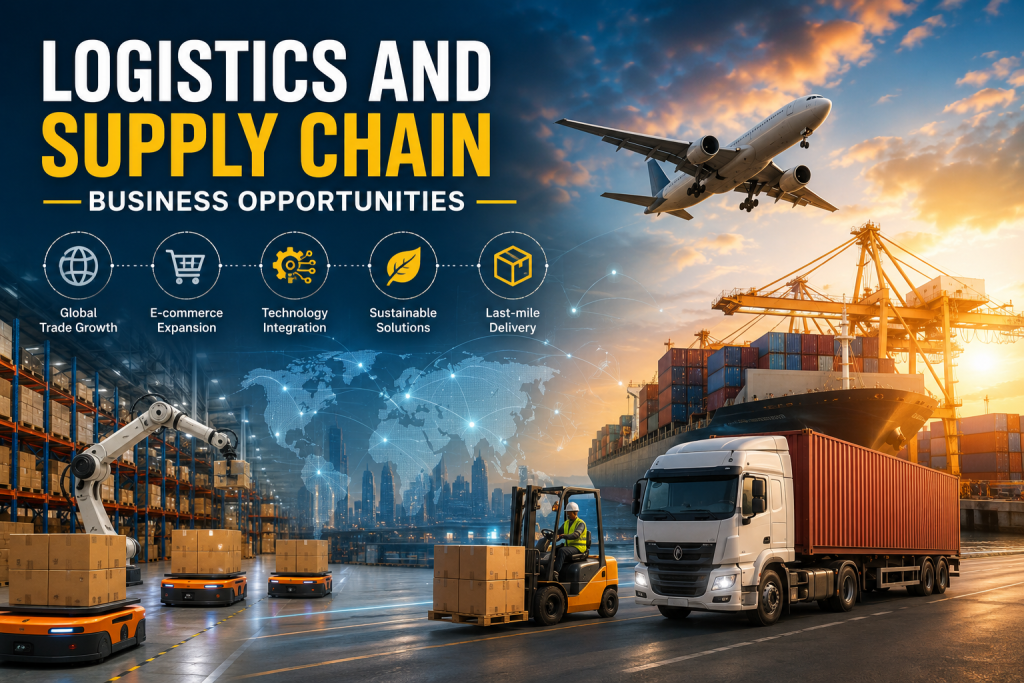

The logistics and supply chain industry has become one of the fastest-growing sectors in the global economy. As businesses expand across borders and online shopping continues to increase, the demand for efficient transportation, warehousing, inventory management, and last-mile delivery services has never been greater. Companies are investing in modern logistics solutions to improve customer satisfaction, reduce operational costs, and streamline supply chain operations.
Technological advancements, changing consumer expectations, and globalization are creating exciting business opportunities for entrepreneurs, startups, and established organizations. Whether through transportation services, digital logistics platforms, warehouse automation, or supply chain consulting, the industry offers numerous avenues for growth and innovation.
Rising Demand for Logistics Services
The rapid growth of e-commerce has significantly increased the need for reliable logistics providers. Consumers now expect faster deliveries, real-time tracking, and flexible shipping options. Businesses require dependable partners who can move products quickly while maintaining cost efficiency.
Manufacturers, retailers, healthcare companies, and food suppliers all depend on strong logistics networks to ensure products reach customers on time. This growing demand continues to create opportunities for businesses specializing in freight transportation, courier services, cold chain logistics, and international shipping.
Small and medium-sized enterprises are also outsourcing logistics operations, allowing specialized service providers to expand their customer base.
Warehousing and Fulfillment Opportunities
Modern supply chains rely heavily on strategically located warehouses that support efficient inventory management and order fulfillment. As online retail grows, companies require additional storage facilities closer to consumers to enable faster deliveries.
Entrepreneurs can establish fulfillment centers that offer inventory storage, packaging, labeling, and shipping services for multiple businesses. Third-party logistics providers (3PLs) continue to gain popularity by handling warehousing and distribution functions on behalf of manufacturers and retailers.
Automated warehouses equipped with robotics, barcode scanning systems, and smart inventory software improve operational efficiency while reducing labor costs.
Technology Is Transforming Supply Chains
Digital transformation has revolutionized logistics management. Businesses now use artificial intelligence, cloud computing, Internet of Things (IoT) devices, and predictive analytics to optimize supply chain operations.
Real-time shipment tracking provides greater visibility throughout the transportation process. Businesses can monitor delivery status, identify delays, and communicate accurate updates to customers.
Artificial intelligence helps forecast demand, optimize delivery routes, and reduce fuel consumption. Machine learning algorithms also improve inventory planning by analyzing historical purchasing patterns.
Blockchain technology is emerging as a valuable tool for improving supply chain transparency by creating secure and traceable transaction records.
Last-Mile Delivery Services
Last-mile delivery has become one of the most competitive segments of the logistics industry. It refers to the final stage of delivering products from distribution centers to customers.
Consumers increasingly expect same-day or next-day delivery, creating opportunities for local delivery companies, courier services, and technology-driven logistics platforms.
Businesses can differentiate themselves through faster deliveries, eco-friendly transportation, flexible scheduling, and superior customer service. Electric delivery vehicles, route optimization software, and automated dispatch systems help improve efficiency while lowering operating costs.
Cold Chain Logistics
The transportation of temperature-sensitive goods represents another rapidly growing business opportunity. Pharmaceuticals, vaccines, dairy products, seafood, frozen foods, and fresh produce all require carefully controlled storage and transportation conditions.
Cold chain logistics companies invest in refrigerated warehouses, temperature-controlled vehicles, and monitoring systems that maintain product quality throughout the supply chain.
As healthcare and food industries continue expanding globally, demand for reliable cold chain services is expected to remain strong.
Sustainable Logistics Solutions
Environmental sustainability is becoming a major priority for logistics companies worldwide. Businesses are seeking ways to reduce carbon emissions while maintaining operational efficiency.
Electric delivery vehicles, alternative fuels, optimized transportation routes, recyclable packaging, and energy-efficient warehouses are helping companies minimize their environmental impact.
Green logistics services are becoming increasingly attractive to environmentally conscious consumers and businesses that want to meet sustainability goals. Companies that invest in eco-friendly operations may gain a competitive advantage in the marketplace.
Supply Chain Consulting and Digital Services
Not every logistics opportunity involves moving physical goods. Many businesses require expert guidance to improve supply chain performance and reduce operational costs.
Supply chain consultants help organizations optimize procurement, inventory management, warehouse operations, supplier relationships, and transportation strategies.
Software companies also have opportunities to develop logistics management platforms, fleet tracking applications, warehouse management systems, transportation management software, and inventory analytics solutions.
These digital tools enable businesses to improve efficiency, increase visibility, and make better operational decisions.
Challenges and Future Growth
Although the logistics industry offers enormous opportunities, businesses must also address several challenges. Rising fuel costs, labor shortages, regulatory compliance, cybersecurity risks, and supply chain disruptions require careful planning and investment.
Companies that embrace innovation, automation, and digital transformation are better positioned to overcome these challenges. Flexible supply chain strategies and diversified supplier networks also improve resilience during unexpected disruptions.
Emerging technologies such as autonomous delivery vehicles, warehouse robotics, drone deliveries, and artificial intelligence will continue reshaping the logistics landscape over the coming years.
Conclusion
The logistics and supply chain industry presents exceptional business opportunities across transportation, warehousing, fulfillment, cold chain logistics, technology solutions, consulting, and sustainable operations. As global trade expands and customer expectations continue to evolve, businesses that prioritize efficiency, innovation, and reliability will be well-positioned for long-term success.
Entrepreneurs entering this sector can capitalize on digital transformation, automation, and environmentally responsible practices to build competitive and future-ready businesses. With continuous advancements in technology and increasing demand for faster, smarter logistics solutions, the industry remains one of the most promising areas for business growth in the years ahead.