
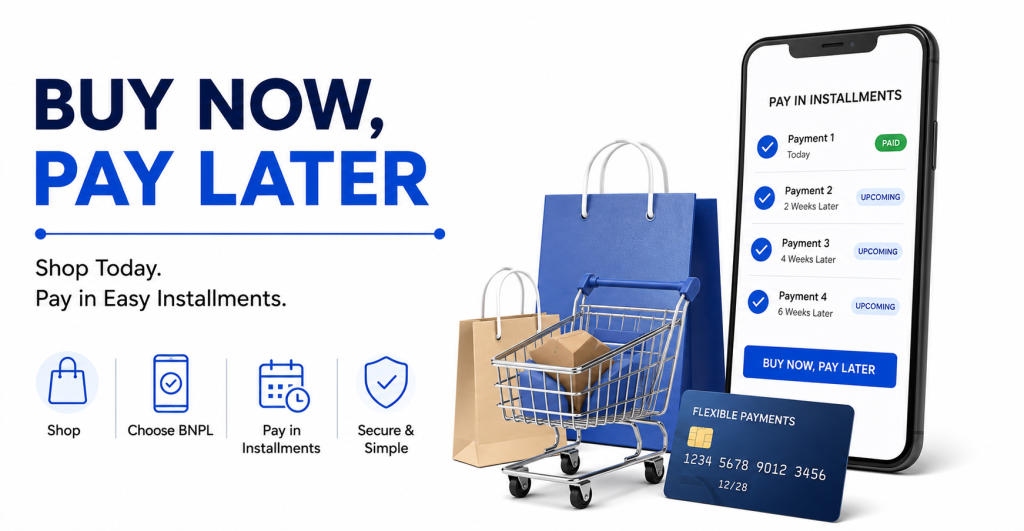

The global payments landscape is undergoing a rapid transformation, and one of the fastest-growing financial innovations is Buy Now, Pay Later (BNPL). Once primarily associated with online shopping, BNPL has evolved into a widely accepted payment solution across retail, healthcare, travel, education, automotive services, and even business-to-business transactions. As consumers increasingly seek flexible payment options and merchants look to improve customer engagement, BNPL is creating significant opportunities across the financial ecosystem.
The growing adoption of digital commerce, increasing smartphone penetration, and advances in fintech are accelerating the expansion of BNPL services. Financial institutions, payment providers, retailers, and technology companies are investing heavily in new BNPL platforms, making installment-based payments more accessible and convenient than ever before.
Rising Consumer Preference for Flexible Payments
One of the biggest opportunities for the BNPL industry stems from changing consumer purchasing behavior. Today’s shoppers increasingly prefer payment methods that offer flexibility without requiring traditional credit cards. BNPL allows customers to divide purchases into manageable installments, often with little or no interest when payments are made on time.
This payment model has gained popularity among younger consumers, particularly Millennials and Generation Z, who tend to favor digital financial solutions and responsible budgeting over revolving credit. The simplicity of approval processes and seamless integration into online checkout experiences have made BNPL one of the most attractive payment options in e-commerce.
As consumers continue prioritizing financial flexibility, demand for installment-based payment solutions is expected to remain strong across both online and physical retail environments.
Retailers Benefit from Higher Sales and Customer Loyalty
For merchants, BNPL represents more than just an alternative payment option—it has become a powerful sales and customer acquisition tool. Retailers offering installment payment solutions often experience higher conversion rates, increased average order values, and lower shopping cart abandonment.
Customers are generally more willing to complete larger purchases when they can spread payments over several weeks or months. This has encouraged retailers across fashion, electronics, home furnishings, beauty products, and luxury goods to integrate BNPL services into their checkout processes.
Beyond increasing sales, BNPL platforms also help businesses attract new customers and strengthen brand loyalty through improved purchasing experiences.
Expansion Beyond Traditional Retail
Although online retail remains the largest application for BNPL, significant opportunities are emerging across new industries.
Healthcare providers are increasingly offering installment payment options for elective procedures, dental care, vision services, and medical treatments. Educational institutions and online learning platforms are also adopting BNPL to make tuition fees and professional certification programs more affordable.
Travel companies now enable customers to split payments for flights, hotels, vacation packages, and cruises, allowing travelers to better manage their budgets. Similarly, automotive service providers are introducing BNPL options for vehicle repairs, maintenance, and accessories.
These expanding use cases are opening entirely new revenue streams for BNPL providers while improving financial accessibility for consumers.
Small Businesses Gain Access to Digital Financing
Small and medium-sized enterprises (SMEs) are becoming an important growth segment for BNPL providers. Traditionally, many small businesses have struggled to compete with larger retailers offering attractive financing options.
Today, integrated BNPL solutions allow SMEs to provide customers with flexible payment plans without assuming significant credit risk. Payment providers manage customer financing while merchants receive payments upfront, improving cash flow and reducing financial uncertainty.
As digital commerce platforms continue simplifying BNPL integration, smaller businesses are increasingly adopting installment payment solutions to remain competitive.
Artificial Intelligence Strengthens Risk Management
Artificial intelligence and advanced data analytics are transforming how BNPL providers assess customer creditworthiness and manage financial risk.
Instead of relying solely on conventional credit scores, many fintech companies now evaluate real-time transaction data, purchasing behavior, spending patterns, and alternative financial indicators to make faster and more accurate lending decisions.
AI-powered fraud detection systems are also improving transaction security by identifying suspicious activities in real time. These technologies help providers minimize defaults while delivering instant payment approvals that enhance the customer experience.
As machine learning capabilities continue advancing, risk assessment models are expected to become even more accurate and efficient.
Cross-Border Digital Commerce Creates New Growth Avenues
The rapid expansion of international e-commerce presents another major opportunity for BNPL providers. Consumers increasingly shop from global online retailers, creating demand for installment payment options that work seamlessly across multiple currencies and markets.
Payment companies are partnering with international merchants, banks, and digital wallets to enable cross-border BNPL transactions while simplifying currency conversion and regulatory compliance.
Emerging markets with growing internet access and expanding digital payment infrastructure are particularly attractive for future BNPL expansion, offering providers access to millions of new consumers.
Regulatory Developments Encourage Sustainable Growth
As BNPL adoption continues accelerating, regulators across various countries are introducing clearer guidelines designed to promote responsible lending and improve consumer protection.
While regulatory oversight may increase compliance requirements for providers, it also creates opportunities to strengthen consumer confidence and encourage long-term market stability.
Companies that prioritize transparent pricing, responsible lending practices, robust data security, and customer education are likely to build stronger reputations and gain competitive advantages in an increasingly regulated environment.
Future Outlook
The future of Buy Now, Pay Later extends well beyond online retail. Continued advances in financial technology, artificial intelligence, embedded finance, and digital banking are expected to make installment-based payments a standard feature across numerous industries.
Opportunities will continue expanding as merchants seek innovative ways to improve customer experiences, consumers demand greater payment flexibility, and financial institutions integrate BNPL into broader digital payment ecosystems.
Businesses investing in secure technology platforms, intelligent risk management, strategic partnerships, and customer-centric financial solutions are well positioned to benefit from the next phase of BNPL growth. As digital commerce continues evolving worldwide, Buy Now, Pay Later is expected to remain one of the most influential innovations shaping the future of consumer finance and digital payments.