
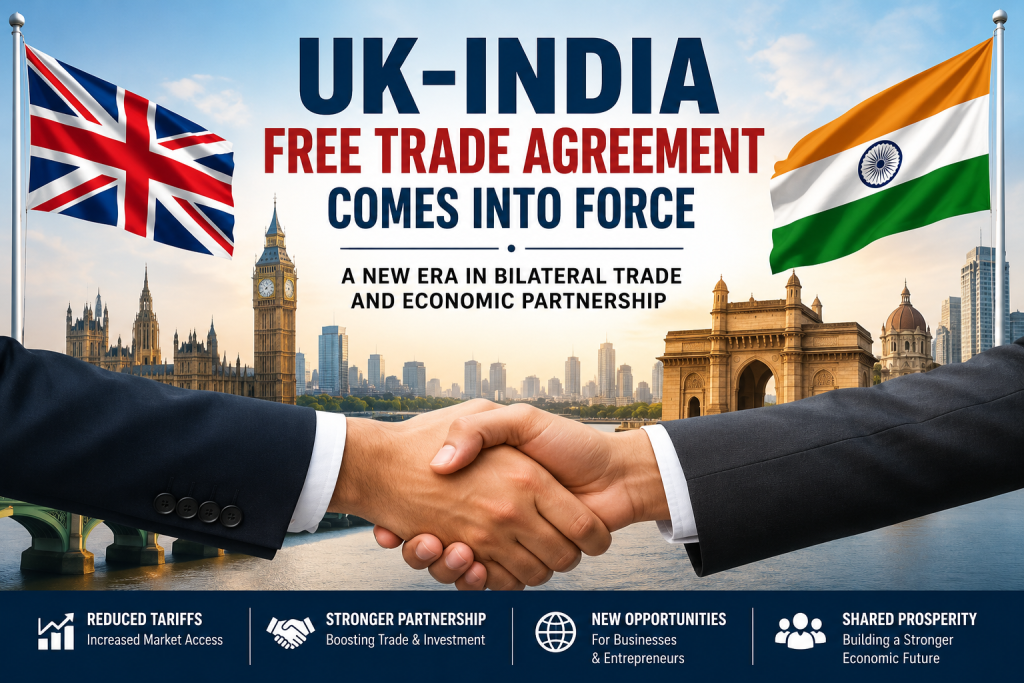

UK-India Free Trade Agreement Officially Takes Effect
The UK-India Free Trade Agreement (FTA) officially came into force on July 15, 2026, marking a historic milestone in the economic relationship between the two countries. The landmark agreement is expected to significantly expand bilateral trade, lower tariffs across a wide range of goods, encourage investment, and create new business opportunities for industries in both nations.
Signed after years of negotiations, the agreement reflects the growing strategic partnership between India and the United Kingdom and is widely regarded as one of the most comprehensive trade deals signed by either country in recent years.
A Major Boost for Bilateral Trade
The agreement aims to remove or substantially reduce tariffs on thousands of products, making exports more competitive while improving market access for businesses on both sides.
Indian exporters are expected to benefit across sectors such as:
- Textiles and apparel
- Gems and jewellery
- Engineering goods
- Pharmaceuticals
- Agricultural products
- Marine products
Meanwhile, UK businesses are expected to gain improved access to India’s rapidly expanding consumer market across automobiles, advanced manufacturing, financial services, technology, and premium consumer products.
Immediate Impact on Trade
The impact of the agreement was visible from the very first day of implementation. According to India’s Commerce Ministry, exporters shipped over USD 140 million worth of goods to the United Kingdom without paying import duties under the newly implemented agreement.
Officials believe this is only the beginning, with bilateral trade expected to increase substantially over the coming years as more businesses utilize the preferential tariff structure.
Investment and Business Opportunities
Beyond tariff reductions, the agreement is designed to strengthen long-term economic cooperation by encouraging investment, improving ease of doing business, and enhancing collaboration across emerging industries.
Key sectors expected to benefit include:
- Information Technology
- Artificial Intelligence
- Advanced Manufacturing
- Renewable Energy
- Healthcare
- Financial Services
- Education
- Professional Services
Industry experts believe the agreement will improve supply chain resilience while creating new opportunities for startups, SMEs, and multinational corporations operating in both markets.
Benefits for Professionals and Services
One of the most significant aspects of the agreement extends beyond merchandise trade. The pact introduces provisions aimed at facilitating professional mobility, expanding services trade, and improving social security arrangements for eligible professionals working across both countries.
This is expected to particularly benefit India’s globally competitive IT, consulting, engineering, financial, and professional services sectors while making cross-border business operations more efficient.
Strengthening a Strategic Partnership
The Free Trade Agreement reinforces the broader strategic relationship between India and the UK, which has expanded significantly in recent years through cooperation in trade, defence, technology, innovation, education, climate initiatives, and investment.
Government leaders from both countries have described the agreement as a foundation for deeper economic integration that could generate billions in additional trade while creating employment opportunities and supporting long-term economic growth.
Conclusion
The implementation of the UK-India Free Trade Agreement marks the beginning of a new era in bilateral economic cooperation. By reducing trade barriers, encouraging investment, and improving market access, the agreement is expected to benefit exporters, businesses, professionals, and consumers in both countries. As companies begin utilizing its provisions, the pact is poised to become one of the defining milestones in modern India-UK economic relations.
FAQs
When did the UK-India Free Trade Agreement come into force?
The agreement officially came into effect on July 15, 2026.
Which sectors will benefit the most?
Major beneficiaries include textiles, pharmaceuticals, gems and jewellery, engineering goods, IT services, manufacturing, agriculture, financial services, and renewable energy.
How does the agreement help exporters?
It reduces or eliminates tariffs on numerous products, making exports more competitive while improving market access in both countries.
Does the agreement include services and professional mobility?
Yes. Besides goods trade, the agreement includes provisions supporting services trade, professional mobility, and social security cooperation.