
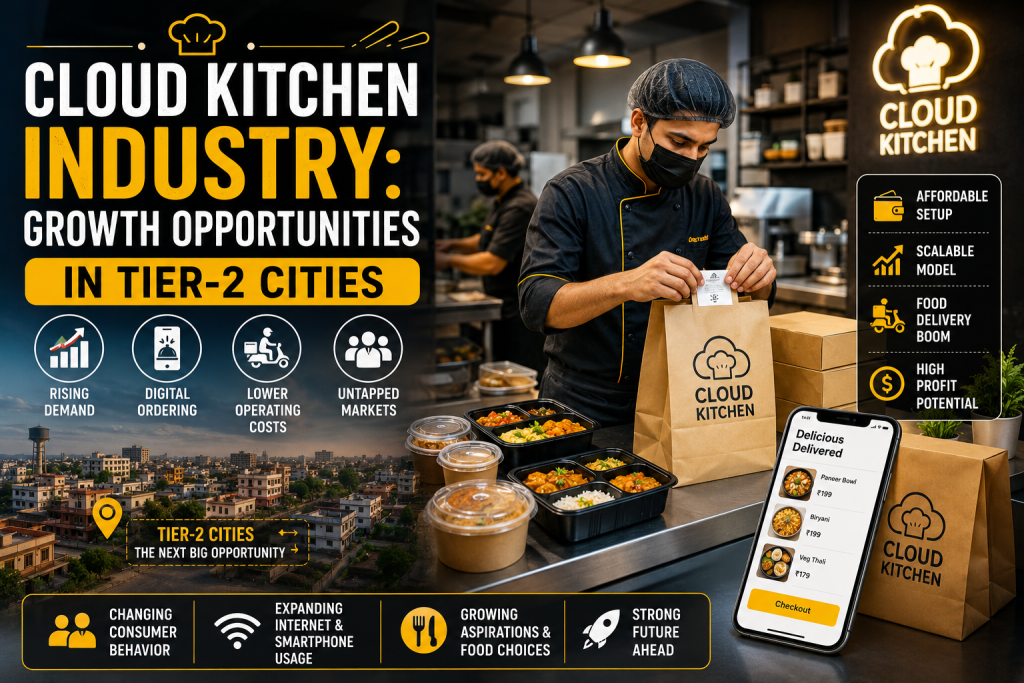

India’s food delivery landscape is evolving rapidly, and one of the biggest beneficiaries of this transformation is the cloud kitchen industry. Once concentrated in metropolitan cities like Mumbai, Delhi, Bengaluru, and Hyderabad, cloud kitchens are now expanding aggressively into Tier-2 cities. Rising disposable incomes, increased smartphone usage, affordable internet access, and changing consumer lifestyles have created the perfect environment for delivery-only food businesses to thrive.
As online food ordering becomes a daily habit for millions of consumers, entrepreneurs are recognizing that the next wave of growth lies beyond the metros. Tier-2 cities offer lower operating costs, growing customer demand, and significantly less competition, making them ideal locations for launching or expanding cloud kitchen brands. Industry forecasts also suggest strong long-term growth for India’s cloud kitchen market, supported by digital adoption and food delivery platforms.
What Is a Cloud Kitchen?
A cloud kitchen, also known as a ghost kitchen or virtual kitchen, is a food preparation facility that serves customers exclusively through online ordering platforms. Unlike traditional restaurants, cloud kitchens do not have dine-in seating. Orders are received through delivery apps, websites, or mobile applications and delivered directly to customers.
This business model eliminates many of the costs associated with operating a conventional restaurant, allowing entrepreneurs to focus on food quality, operational efficiency, and customer satisfaction.
Why Tier-2 Cities Are Becoming Growth Hubs
The growth of Tier-2 cities has accelerated over the past few years due to improved infrastructure, expanding employment opportunities, and increasing digital connectivity. As these cities become more urbanized, consumer preferences are changing rapidly.
Several factors are driving cloud kitchen growth in these markets:
Lower Operational Costs
One of the biggest advantages of launching a cloud kitchen in a Tier-2 city is affordability.
Rental costs can be significantly lower than in metropolitan areas. Lower wages, utility expenses, and overall operating costs allow entrepreneurs to achieve profitability faster while maintaining competitive pricing. Industry examples indicate that kitchen rentals in Tier-2 cities can be a fraction of comparable metro locations.
Growing Online Food Delivery Demand
Consumers in Tier-2 cities have become increasingly comfortable ordering food online. The widespread use of smartphones, affordable mobile internet, and digital payment systems has made food delivery more accessible than ever.
Young professionals, students, and working families increasingly prefer ordering meals rather than cooking after busy workdays.
This behavioral shift continues to expand the customer base for cloud kitchens.
Less Competition Creates Better Opportunities
Unlike major metropolitan markets where hundreds of delivery brands compete for visibility, many Tier-2 cities remain relatively underserved.
This gives new businesses an opportunity to:
- Build brand recognition quickly
- Develop loyal customers
- Capture local market share
- Experiment with multiple virtual brands
Entrepreneurs entering these cities early often enjoy a valuable first-mover advantage before the market becomes crowded.
Regional Cuisine Has Massive Potential
One of the strongest advantages of operating in Tier-2 cities is the ability to focus on local food preferences.
Instead of competing solely with national fast-food brands, cloud kitchens can specialize in regional favorites such as:
- Authentic biryanis
- Local street food
- Traditional thalis
- Healthy regional meals
- Breakfast specialties
- Desserts unique to the region
Consumers often appreciate authentic local flavors prepared with consistent quality and delivered quickly.
Technology Makes Scaling Easier
Modern cloud kitchens rely heavily on technology.
Restaurant management software helps businesses:
- Track orders
- Manage inventory
- Forecast demand
- Monitor kitchen performance
- Reduce food waste
- Improve customer service
Artificial intelligence, data analytics, and customer feedback also enable operators to optimize menus and pricing based on consumer preferences.
Technology allows even small businesses to compete efficiently with larger restaurant chains.
Multiple Revenue Streams
Cloud kitchens can maximize revenue by operating several virtual restaurant brands from the same kitchen.
For example, one kitchen can simultaneously prepare:
- Pizza
- Chinese cuisine
- South Indian food
- Burgers
- Healthy bowls
- Desserts
Customers ordering from different brands may never realize the meals are prepared in the same facility.
This strategy improves kitchen utilization while increasing sales opportunities.
Challenges Entrepreneurs Should Consider
Although opportunities are significant, cloud kitchens also face several challenges.
Food delivery platforms charge commissions that affect profit margins. Businesses must also maintain consistent food quality, manage customer reviews, optimize packaging, and ensure fast deliveries.
Competition is increasing as more entrepreneurs recognize the potential of Tier-2 markets. Building a recognizable brand through digital marketing and customer engagement is becoming increasingly important.
Additionally, maintaining efficient supply chains and controlling food costs remain essential for long-term profitability.
Best Tier-2 Cities for Cloud Kitchen Expansion
Several Indian Tier-2 cities are emerging as attractive destinations for cloud kitchen investments due to population growth, infrastructure development, and rising digital adoption.
Some promising locations include:
- Indore
- Jaipur
- Lucknow
- Coimbatore
- Surat
- Kochi
- Bhubaneswar
- Nagpur
- Mysuru
- Visakhapatnam
These cities continue to attract businesses because they combine growing consumer demand with relatively affordable operating environments.
Future Outlook
The future of India’s cloud kitchen industry appears highly promising, especially in Tier-2 cities. Market projections indicate sustained double-digit growth, driven by rising online food delivery, urbanization, smartphone penetration, and evolving consumer lifestyles. As digital commerce expands beyond major metros, smaller cities are expected to contribute an increasing share of new demand.
Entrepreneurs who focus on operational efficiency, regional cuisine, technology integration, and exceptional customer experiences will be well positioned to capitalize on this opportunity. While challenges such as delivery costs and platform commissions remain, the combination of lower startup costs and expanding demand makes Tier-2 cities one of the most attractive markets for cloud kitchen businesses in the coming years.