
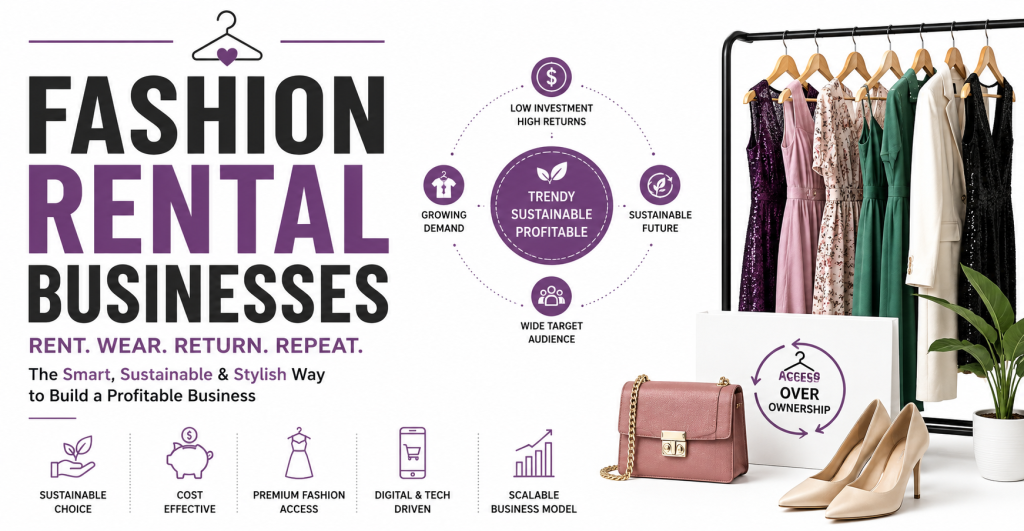

Not long ago, owning a wardrobe full of new clothes was considered a sign of style and success. Today, that mindset is changing. Consumers, especially younger generations, are beginning to ask a different question: Why buy an outfit you’ll wear only once when you can rent it?
From luxury gowns and designer handbags to business suits and maternity wear, fashion rental services are transforming the way people think about clothing. Instead of spending hundreds of dollars on garments that may sit unused in a closet, customers can now access premium fashion for a fraction of the cost.
What started as a niche concept has quickly evolved into one of the most promising business opportunities in the fashion industry. As sustainability, affordability, and convenience become top priorities, fashion rental businesses are attracting customers, investors, and entrepreneurs from around the world.
Why Fashion Rental Is Growing So Quickly
The fashion industry is experiencing a major shift. Consumers no longer want to own everything they wear. Instead, many prefer flexibility, affordability, and variety.
Social media has played a huge role in this transformation. People love wearing something new for weddings, vacations, corporate events, and photoshoots, but they don’t necessarily want to purchase expensive outfits they’ll rarely wear again. Fashion rental offers the perfect solution by allowing customers to enjoy premium styles without the long-term commitment.
At the same time, environmental awareness continues to grow. Millions of garments end up in landfills every year, while fast fashion contributes significantly to waste and pollution. Renting clothes helps extend the life of garments, making fashion more sustainable without compromising style.
This combination of economic and environmental benefits has made fashion rental increasingly attractive to modern consumers.
More Than Just Designer Dresses
When people hear “fashion rental,” they often think about luxury evening gowns. In reality, the market is far more diverse.
Today, businesses rent everything from office wear and casual clothing to children’s outfits, maternity fashion, handbags, shoes, jewelry, and even sportswear. Some companies focus on subscription-based wardrobes, allowing customers to swap outfits every month, while others specialize in one-time rentals for special occasions.
This diversity creates opportunities for entrepreneurs to target different customer segments instead of competing in a single niche.
Business Models Driving the Industry
One of the biggest strengths of the fashion rental industry is its flexibility.
Some companies operate membership programs where subscribers receive a fixed number of garments each month. Others allow customers to rent individual items for specific occasions.
Peer-to-peer platforms have also become popular, enabling people to rent clothing directly from one another. This approach reduces inventory costs while creating additional income opportunities for clothing owners.
Luxury brands are beginning to enter the rental market as well, recognizing that younger consumers value access over ownership. Rather than losing customers, many brands see rental services as a way to introduce new audiences to premium products.
These different business models demonstrate that fashion rental is not a one-size-fits-all industry. Entrepreneurs can choose an approach that matches their investment level, target audience, and long-term goals.
Technology Is Making Fashion Rental Smarter
Technology is playing an important role in the industry’s rapid growth.
Artificial intelligence is helping businesses recommend outfits based on customer preferences, previous rentals, body measurements, and seasonal trends. This creates a more personalized shopping experience while improving customer satisfaction.
Inventory management software tracks garment availability, cleaning schedules, and maintenance, ensuring that every item remains in excellent condition. Mobile apps simplify the rental process by allowing customers to browse collections, schedule deliveries, and manage returns with just a few taps.
Some companies are even experimenting with virtual try-on technology, giving shoppers greater confidence before renting clothing online.
As digital innovation continues, technology will become one of the biggest competitive advantages for fashion rental businesses.
Why Investors Are Paying Attention
Fashion rental is no longer viewed as just another trend in sustainable fashion. It has become a business model with strong long-term potential. As consumers increasingly prefer experiences over ownership, rental platforms are attracting attention from investors looking for scalable and recurring revenue opportunities.
Unlike traditional clothing retailers that rely on one-time purchases, fashion rental businesses can generate income from the same garment multiple times. A designer dress, for example, may be rented dozens of times throughout its lifecycle, significantly increasing its overall value. This model improves inventory utilization while reducing waste, creating benefits for both businesses and the environment.
Subscription-based services make the opportunity even more attractive. Monthly membership plans provide predictable recurring revenue while encouraging customers to remain engaged with the platform over the long term.
Opportunities Beyond Clothing
The rental economy extends far beyond dresses and formal wear.
Many businesses are now offering rental services for handbags, luxury watches, jewelry, footwear, maternity clothing, baby apparel, and even corporate wardrobes. Some platforms cater specifically to travelers who prefer renting seasonal clothing rather than carrying extra luggage.
Corporate fashion rental is also emerging as a promising niche. Companies can provide rental uniforms, professional attire, or event-specific clothing for employees, helping businesses reduce procurement costs while supporting sustainability goals.
There is also growing demand from influencers, photographers, production houses, and event organizers who require premium fashion items for short-term use rather than permanent ownership.
These expanding applications demonstrate that fashion rental is evolving into a broader lifestyle and business service rather than simply an alternative to shopping.
Challenges Facing Fashion Rental Businesses
Like any growing industry, fashion rental comes with its own set of challenges.
Maintaining garment quality is one of the biggest priorities. Every item must be professionally cleaned, inspected, repaired when necessary, and carefully packaged before reaching the next customer. Consistently delivering high-quality products is essential for building customer trust.
Logistics is another important factor. Efficient delivery, timely returns, inventory tracking, and damage management require strong operational systems. Businesses that can streamline these processes often gain a significant competitive advantage.
Consumer perception also continues to evolve. While rental fashion has become more accepted, some customers still prefer owning clothing. Building awareness around affordability, convenience, and sustainability will remain an important part of industry growth.
The Future of Fashion Rental
The future looks promising for fashion rental businesses as technology and consumer behavior continue to evolve.
Artificial intelligence will make recommendations more personalized, while predictive analytics will help companies forecast demand and optimize inventory. Smart inventory systems will reduce operational costs, and virtual fitting technologies may further improve customer confidence when renting online.
Sustainability will continue driving industry growth. As governments, brands, and consumers place greater emphasis on reducing waste and supporting circular business models, rental fashion is expected to become an increasingly important part of the global apparel industry.
Luxury brands are also embracing this shift by partnering with rental platforms or launching their own rental services, recognizing that younger consumers value flexibility and access as much as ownership.
Why Entrepreneurs Should Explore This Opportunity
Fashion rental offers entrepreneurs an opportunity to build a business that combines profitability with sustainability.
Whether launching a local rental boutique, an online marketplace, a subscription service, or a peer-to-peer platform, there are multiple ways to enter the market. Advances in AI, mobile technology, digital payments, and logistics have made it easier than ever to manage rental operations efficiently.
Entrepreneurs who focus on customer experience, reliable operations, and niche markets can differentiate themselves in an increasingly competitive landscape.
As the sharing economy continues expanding, fashion rental is well positioned to become one of the defining business models of the next decade.
Final Thoughts
Fashion rental businesses are changing more than the way people shop they are redefining how consumers think about ownership.
Instead of purchasing clothing that may only be worn once, people are embracing a smarter approach that offers flexibility, affordability, and sustainability. At the same time, businesses are discovering a model that maximizes product value, generates recurring revenue, and supports a circular economy.
For entrepreneurs, investors, and fashion brands, this shift represents more than a passing trend. It is a growing market driven by changing consumer behavior, digital innovation, and increasing environmental awareness.
As technology continues improving and demand for sustainable fashion rises, fashion rental businesses have the potential to reshape the future of the apparel industry.
The next generation of successful fashion companies may not be those that sell the most clothing but those that help people enjoy fashion in a more flexible, responsible, and sustainable way.